
Recent Posts
Categories
The Role of Expansion Tanks in High-Altitude Plumbing
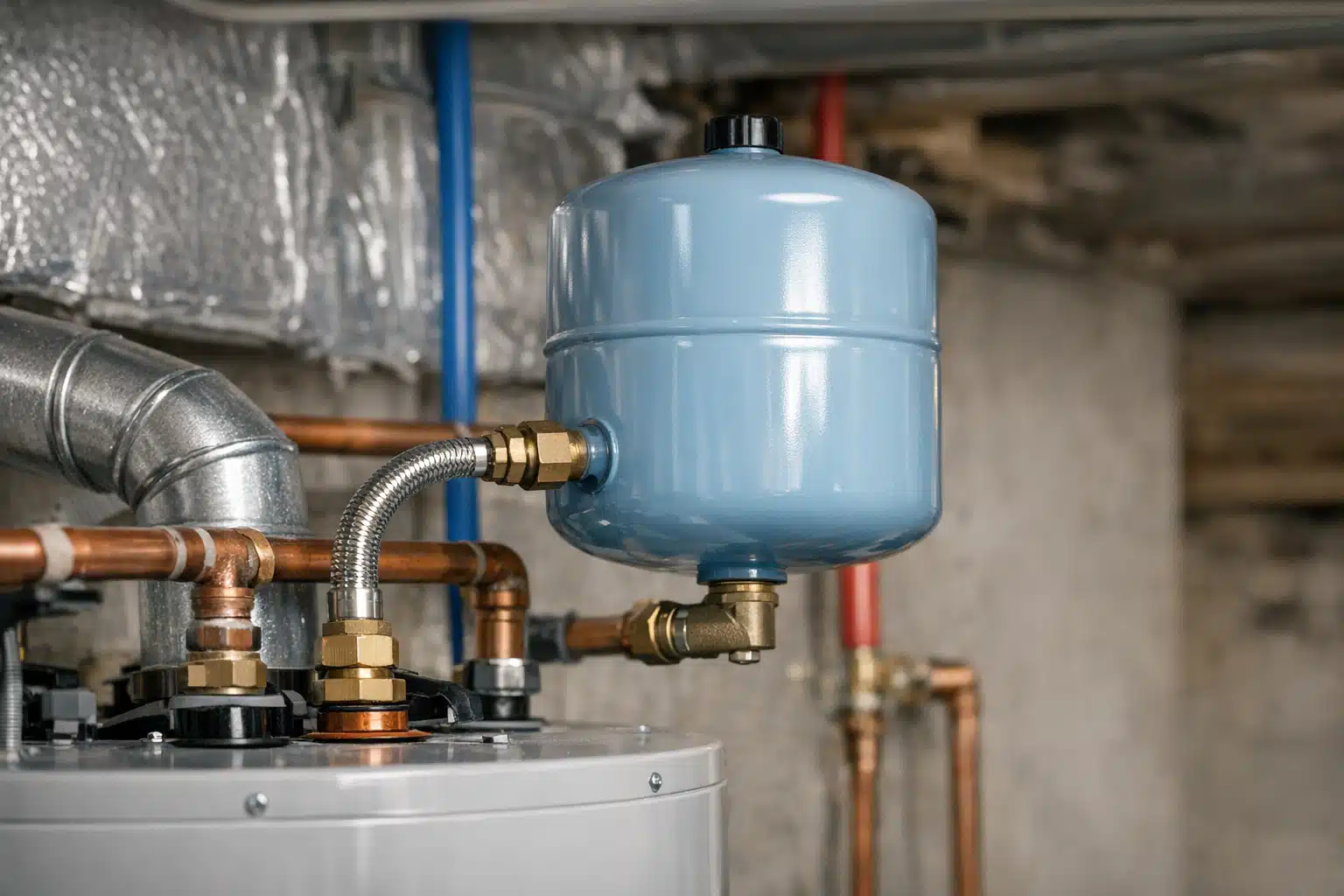
Expansion tanks absorb excess water volume when water heaters heat up, preventing pressure spikes in closed plumbing systems. At Arvada's 5,300-foot elevation, proper pre-charge settings are critical because atmospheric pressure differences affect tank performance.
- Most Arvada homes have closed systems due to backflow preventers, making expansion tanks necessary for every heating cycle. The pre-charge pressure must match your home's incoming water pressure - typically 50 to 80 psi in the area.
- Failed tanks show signs like dripping relief valves, banging pipes, or pressure above 80 psi during heating. A quick test involves tapping the tank - the top should sound hollow - or pressing the Schrader valve to check for air versus water.
- Standard 40 to 50 gallon water heaters typically need a 2-gallon expansion tank. Installation costs range from $150 to $350 for a basic swap in the Arvada and Westminster area.
An expansion tank is a small steel canister that absorbs excess water pressure created when your water heater heats water and causes it to expand. At higher elevations like 5,300 feet, these tanks work harder because atmospheric pressure differences affect how water behaves in closed plumbing systems. Without a properly functioning expansion tank, homeowners may experience groaning pipes, drips, or relief valves that release unexpectedly.
A water heater that groans, drips, or pops its relief valve usually points to one overlooked part: the expansion tank. At Arvada’s 5,300-foot elevation, that small steel canister works harder than most homeowners realize. Here is how expansion tanks keep your pressure in check and why altitude changes the math.
You will learn what an expansion tank does, how thinner air at our elevation shifts the pressure balance, and the warning signs that yours has failed. We will cover sizing, pre-charge settings, and local code points for Arvada and nearby Front Range homes.
What an Expansion Tank Does
An expansion tank is a small pressure vessel that absorbs excess water volume when your water heater heats a tank of water. Heated water expands. That extra volume needs somewhere to go.
Inside the tank sits a rubber diaphragm with air on one side and water on the other. As water expands, it pushes against the air cushion. When demand opens a faucet, the cushion pushes water back into the line.
Without this cushion, pressure spikes against a closed valve. In a closed plumbing system, that pressure has nowhere to escape except your relief valve, fixtures, or pipe joints.
Why Arvada Homes Have Closed Systems
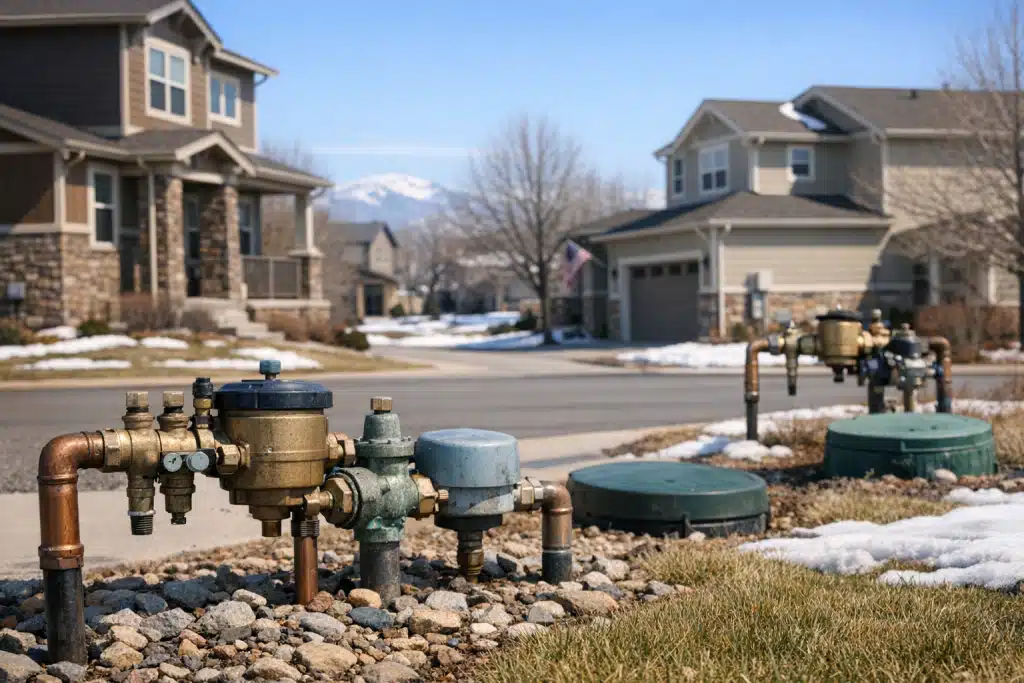
Most homes on the Arvada water supply have a backflow preventer or pressure-reducing valve at the meter. Both create a one-way, closed system. Water cannot flow back into the city main.
That means thermal expansion has no outlet. An expansion tank becomes the pressure relief point your system needs every heating cycle.
How Expansion Tanks Work at Altitude
Expansion tanks work the same way mechanically at altitude, but the pressure settings must match local conditions. At higher elevation, atmospheric pressure is lower, which affects how the air charge behaves.
Here is the direct answer homeowners ask about:
- Water heats and expands inside your tank, raising system pressure.
- The expanding water pushes against the air-charged diaphragm.
- The air cushion compresses, holding pressure within safe limits.
- When water cools or a tap opens, the cushion pushes water back.
The key altitude detail lives in the pre-charge pressure. That is the air pressure set in the tank before water ever enters.
Why Altitude Changes the Pre-Charge
Pre-charge pressure must equal your home’s incoming water pressure. At Arvada’s elevation, static water pressure from municipal supply can run anywhere from 50 to 80 psi depending on your zone.
Set the pre-charge too low and the tank fills with water immediately. It loses its air cushion and stops absorbing expansion. Set it too high and the diaphragm never flexes, giving you no protection at all.
A tank charged at sea-level assumptions will read differently once installed here. Checking pre-charge with the water side depressurized is the only accurate method at our elevation.
Signs Your Expansion Tank Has Failed
Expansion tanks do not last forever. The diaphragm wears, and the air charge leaks over years of heating cycles. At our Front Range elevation, pressure swings can speed that wear.
Watch for these common failure signs in Arvada and Wheat Ridge homes:
- Dripping relief valve on the water heater, especially after the burner runs.
- Banging or knocking pipes when water heats up.
- Pressure gauge climbing above 80 psi during heating cycles.
- Running toilets or weeping faucets with no clear leak.
- A tank that feels full of water when you tap it — a healthy tank sounds hollow on top.
Tap the top and bottom of the tank. The upper half should sound hollow, the lower half solid. If both sound solid, the diaphragm has likely failed.
The Quick Air-Valve Test
Every tank has a Schrader valve, like a tire valve, on the bottom. Press it briefly. Air means the diaphragm still holds; water spraying out means the tank is done.
This check takes thirty seconds and tells you more than any guess. Pair it with a pressure gauge reading at an outdoor spigot for a full picture.
Sizing an Expansion Tank for High-Altitude Plumbing
High-altitude plumbing in the Denver metro rewards correct sizing. Too small a tank leaves no room for expansion. Too large wastes money and space.
Two numbers drive the size:
- Water heater capacity — a 40-gallon tank needs less than an 80-gallon tank.
- Incoming water pressure — higher supply pressure calls for a larger tank.
For a standard 40- or 50-gallon residential water heater in Arvada, a 2-gallon expansion tank handles most homes. Larger families with high-demand heaters may need a 4.4-gallon model.
Cost Expectations for Arvada Homeowners
Pricing helps you plan before calling. Here is a realistic range for the Arvada and Westminster area:
- Expansion tank part: $40 to $120 for a standard residential model.
- Installed with labor: $150 to $350 for a straightforward swap.
- With a new pressure-reducing valve: $400 to $700 if pressure correction is needed.
Homes with corroded fittings or tight mechanical rooms can run higher. A field quote confirms the real number for your setup.

 Posted on Google
Code and Installation Points for the Front Range
Colorado plumbing code requires thermal expansion control on closed systems. That rule covers nearly every modern Arvada, Broomfield, and Denver home with a backflow device.
A few installation details matter at our elevation:
- Mount the tank on the cold-water line feeding the water heater.
- Support the tank weight — a water-filled tank is heavy and stresses pipe joints.
- Match pre-charge to measured pressure, not a factory default.
- Install a pressure gauge so you can monitor the system over time.
Skipping the pressure match is the most common mistake we find on failed installs. A tank set to 40 psi on an 70-psi system never protects anything.
Seasonal Pressure Shifts in Arvada
Winter brings colder incoming water, which changes expansion behavior. Cold water entering a hot tank creates a larger temperature swing and more expansion.
Homes that seemed fine in summer sometimes pop a relief valve in January. If your valve drips only in cold months, your expansion tank deserves a look.
When to Call a Plumber
Some checks you can handle yourself. The air-valve test and a pressure gauge reading take minutes. Replacing the tank or correcting pressure calls for trained hands.
Reach out to an Arvada plumber when you see:
- A relief valve that keeps dripping after a tank swap.
- System pressure above 80 psi that you cannot explain.
- Water spraying from the tank’s air valve.
- Repeated water heater issues tied to pressure.
Correct diagnosis saves you from replacing a water heater that only needed a $150 tank.
Conclusion
Expansion tanks protect your pipes, fixtures, and water heater by giving thermal expansion a place to go. At Arvada’s elevation, matching the pre-charge to your real water pressure makes the difference between protection and a failed install. A quick air-valve test and a pressure reading tell you where your system stands.
If your water heater drips, your pipes bang, or your pressure climbs, Cardom Plumbing & Heating can check and replace your expansion tank across Arvada, Wheat Ridge, Westminster, Broomfield, and Denver. Call or text us at 720‑775‑8322, email tomd@cardomcolorado.com, or visit https://www.cardomcolorado.com to schedule service.


