
Recent Posts
Categories
How to Choose the Right Water Filter for Arvada’s Hard Water
Arvada's water supply from mountain snowmelt contains high calcium and magnesium levels, causing hard water issues in local homes. This guide explains how to choose between water filters and softeners based on your specific water test results and needs.
- Water hardness in the Denver metro ranges from 3 to 10 GPG, with seasonal spikes during spring runoff that worsen scale problems around April and May.
- Softeners remove calcium and magnesium to stop scale buildup, while filters target chlorine, sediment, and taste - many Arvada homes benefit from using both systems together.
- System costs range from $300 for under-sink RO units to $4,500 for softener and whole-house filter combos, with ongoing expenses for salt refills and cartridge replacements.
To choose the right water filter for hard water, start by identifying signs like scale buildup in kettles, spotty dishes, and stressed water heaters. These indicate mineral-heavy water that needs treatment. Consider a water softener or whole-house filtration system designed to reduce calcium and magnesium levels, protecting your appliances and improving water quality throughout your home.
Scale buildup inside your kettle, spotty glasses straight from the dishwasher, and a water heater that groans after three years are all signs of one thing. Your home runs on mineral-heavy water, and a good water filter can fix most of it.
Arvada draws much of its supply from mountain snowmelt stored in Ralston and Clear Creek reservoirs. That water picks up calcium and magnesium along the way, which is why local homes see hard water scale year-round.
This post breaks down how to match a filter to your actual water, what each type costs, and which systems hold up best along the Front Range.
What Makes Arvada Hard Water So Hard
Water hardness is measured in grains per gallon (GPG). Anything above 7 GPG counts as hard. Much of the Denver metro, including Arvada, sits in the 3 to 10 GPG range depending on the season and source.
Snowmelt-fed supplies spike in spring when runoff mixes fresh mineral content into the system. That seasonal shift is why your scale problems can worsen around April and May.
Signs You’re Dealing With Arvada Hard Water
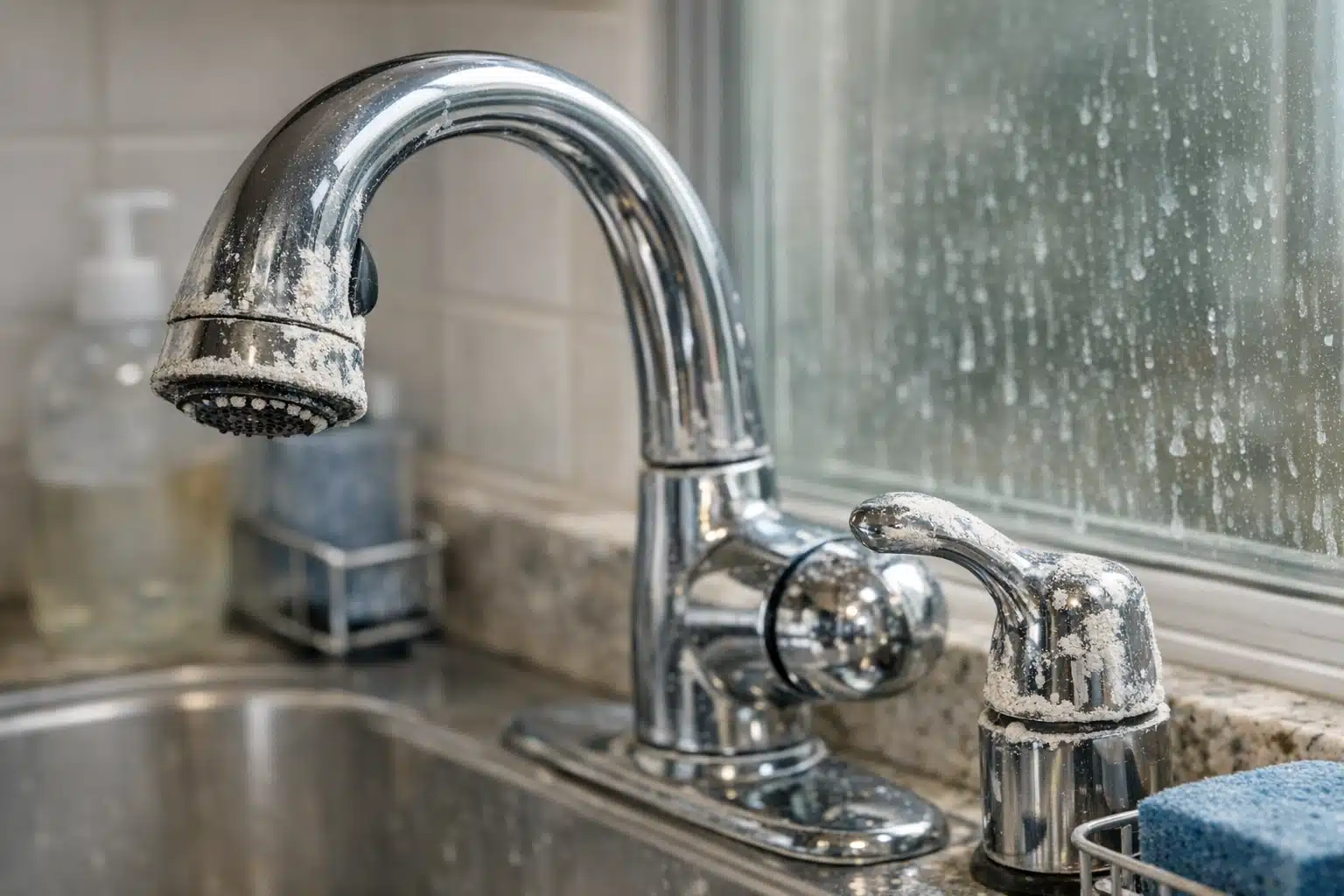
- White crust on faucets, showerheads, and glass shower doors
- Soap and shampoo that won’t lather
- Stiff laundry and faded colors
- A water heater losing efficiency before year five
- Low flow from fixtures caused by clogged aerators
Scale coats the inside of pipes and tanks like plaque in an artery. Over time it shrinks pipe diameter and forces appliances to work harder.
Filter vs. Softener: Know the Difference Before You Buy
These two terms get mixed up constantly, and buying the wrong one wastes money. Here is the plain difference.
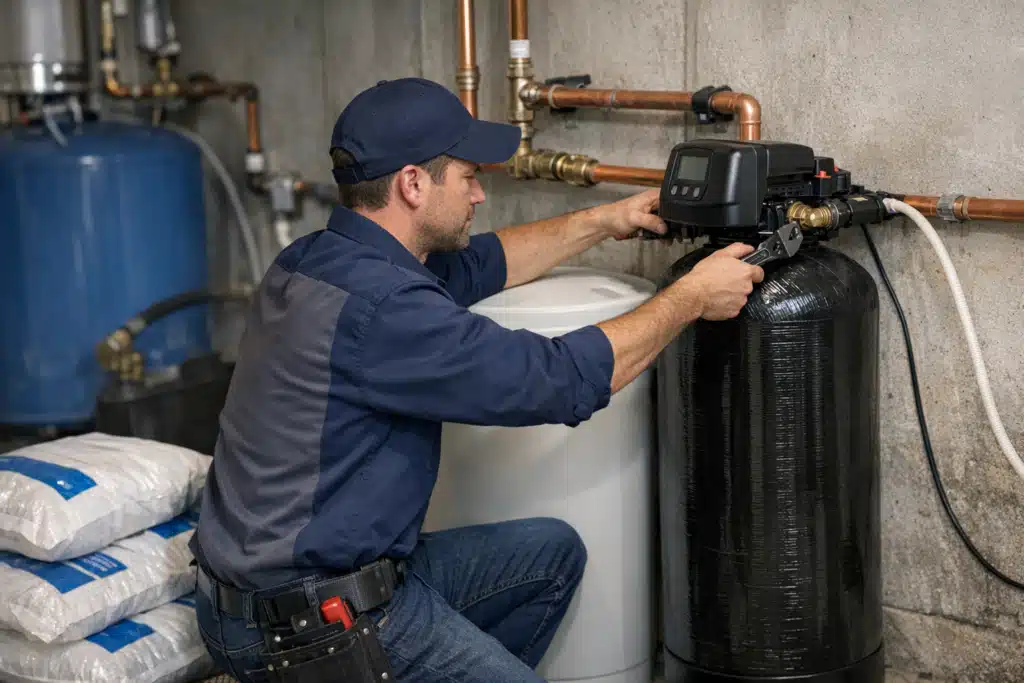
A water softener removes calcium and magnesium using salt-based ion exchange. It stops scale and protects your plumbing.
A water filter targets contaminants like chlorine, sediment, taste, and odor. It improves what comes out of the tap but does not remove hardness minerals.
Many Arvada homes need both working together. The softener protects pipes and appliances, and the filter cleans up drinking water.
When You Need a Softener Instead of a Filter
If your main complaints are scale, crusty fixtures, and short appliance lifespans, start with a softener. A standalone water filter will not touch those issues.
If your water already tests soft but tastes of chlorine, a point-of-use filter at the kitchen sink makes more sense.
Types of Water Filters for Hard Water Homes
Choosing the right system depends on what you want cleaned and how many fixtures it serves. Here are the main types we install across Arvada and Wheat Ridge.
Whole-House Carbon Filters
Installed on the main line, these remove chlorine, sediment, and odor from every tap. They pair well with a softener for homes that want full coverage.
Expect a lifespan of 3 to 5 years on the carbon media before replacement.
Reverse Osmosis (RO) Systems
RO forces water across a membrane that strips out nearly everything, including dissolved minerals. Most homeowners install it under the kitchen sink for drinking and cooking water.
RO handles hard water well at a single tap. It wastes some water during filtration, which matters during Front Range summer watering restrictions.
Salt-Free Conditioners
These do not remove minerals. Instead they alter the crystal structure so scale sticks less to surfaces.
Salt-free units suit homeowners who want less maintenance and no salt hauling. They reduce scale but do not give you that slick “soft water” feel.
Sediment Pre-Filters
Spring runoff carries extra grit into Arvada’s supply. A sediment pre-filter protects both your softener and your finer filters from early clogging.
What a Water Filter System Costs in the Arvada Area
Pricing varies by system size, water test results, and installation needs. Here is a realistic range for Front Range homes.
- Under-sink RO system: $300 to $800 installed
- Whole-house carbon filter: $900 to $2,000 installed
- Salt-based softener: $1,200 to $2,800 installed
- Salt-free conditioner: $1,000 to $2,500 installed
- Softener plus whole-house filter combo: $2,500 to $4,500 installed
Older Arvada homes with galvanized or tight crawlspace plumbing can push labor costs higher. A water test before purchase prevents overbuying.
Ongoing Costs to Plan For
- Carbon media swaps every 3 to 5 years
- RO membrane replacement every 2 to 3 years
- Softener salt refills, roughly $5 to $15 per month
- Sediment cartridge changes every 3 to 6 months during runoff season
How to Choose the Right Water Filter for Your Home
Follow these steps before you spend a dollar on equipment.
- Test your water. Measure hardness in GPG plus chlorine and sediment levels.
- Name your main problem. Scale and appliance wear point to a softener. Taste and odor point to a filter.
- Pick your coverage. Decide between whole-house protection or a single drinking tap.
- Match capacity to household size. A family of five needs more flow than a couple.
- Plan for maintenance. Factor in salt hauling or cartridge swaps you can live with.
Homes in Westminster and Broomfield see similar hardness to Arvada, so the same logic applies across the north metro.
Common Mistakes Arvada Homeowners Make
- Buying a filter when they needed a softener
- Skipping the water test and oversizing the system
- Ignoring sediment pre-filters during spring runoff
- Placing RO units where the reject line can’t drain properly
- Installing softeners without a bypass for outdoor spigots

 Posted on Google
Installation Details Specific to Front Range Homes
Many Arvada houses built in the 1970s and 80s have limited mechanical room space near the water heater. Softener brine tanks need clearance and a nearby drain.
Unfinished basements make the main-line tie-in straightforward. Slab-on-grade homes in newer Candelas or Leyden Rock neighborhoods may need a loop installed in the garage.
Colorado plumbing code requires proper backflow protection on any connection to the municipal supply. A licensed plumber keeps your install compliant and warranty-safe.
Why Local Expertise Matters for Hard Water
Generic online systems get sized for average national hardness. Arvada’s snowmelt supply and seasonal spikes do not match that average.
We test your actual water, size the system to your GPG, and set regeneration cycles for local conditions. That means fewer salt refills and longer media life.
Our team services Arvada, Wheat Ridge, Westminster, Broomfield, and nearby Denver communities with fast response and honest sizing.
Final Takeaways
Match your system to your water test, not a sales pitch. A softener stops scale, a filter cleans taste, and many homes benefit from both. Plan for seasonal sediment spikes and routine maintenance to keep performance steady.
Ready to fix your Arvada hard water for good? Call or text Cardom Plumbing & Heating at 720‑775‑8322, email tomd@cardomcolorado.com, or visit https://www.cardomcolorado.com to schedule a water test and filter consultation.


