
Recent Posts
Categories
The Impact of Colorado’s Hard Water on Plumbing Systems
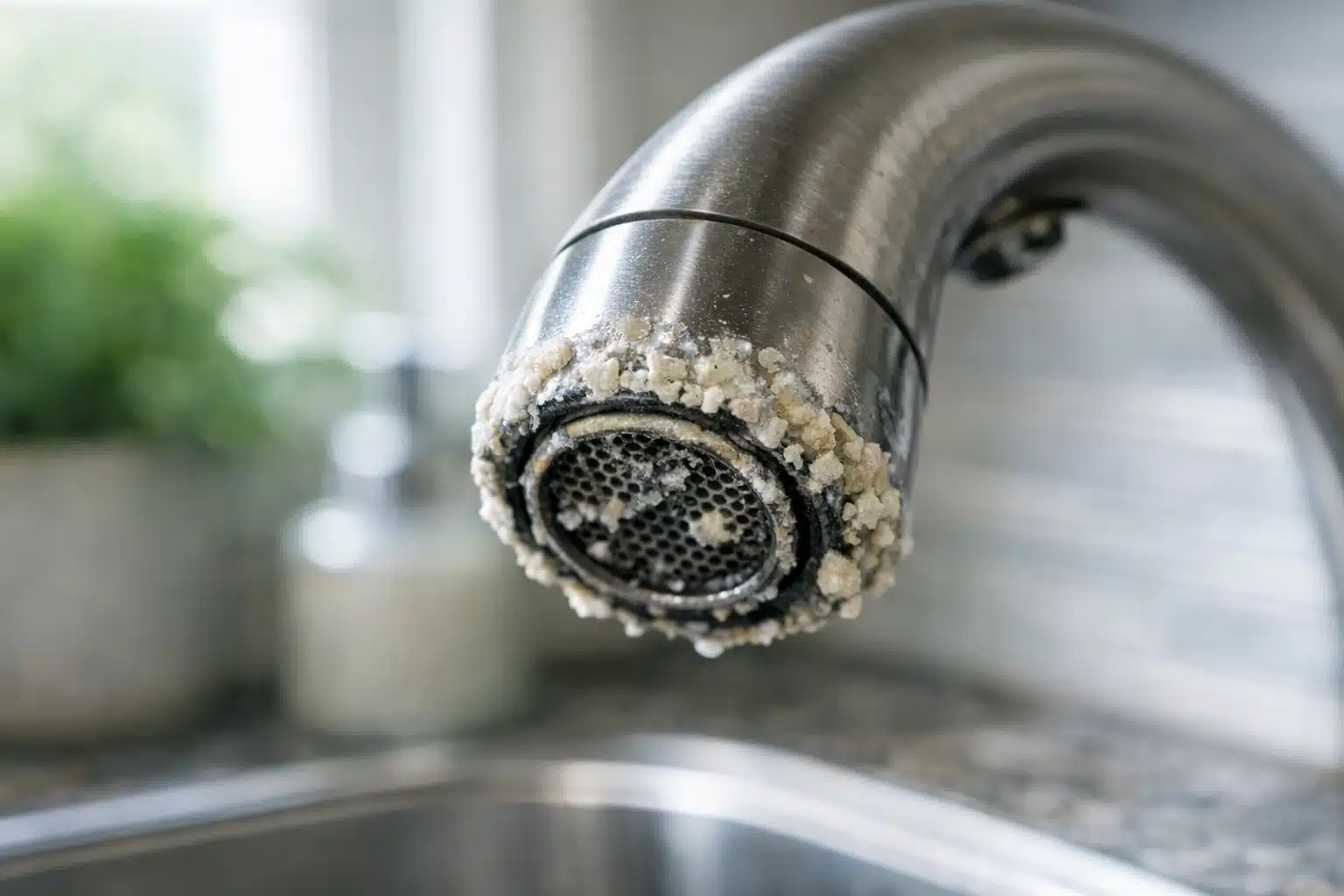
Colorado's hard water, which tests between 8 and 15 GPG in the Denver metro area, causes mineral buildup that damages pipes, fixtures, and appliances faster than homeowners expect.
- Scale buildup narrows pipes, clogs aerators and showerheads, and locks up valves. Older galvanized steel plumbing suffers the most, while copper and PEX resist scale better but still show fixture damage.
- Water heaters take the hardest hit, with tanks rated for 10 to 12 years often failing at 6 to 8 years. Popping sounds, longer recovery times, and higher energy bills signal sediment problems.
- Prevention costs less than repair - installing a water softener, flushing the water heater yearly, and cleaning aerators regularly can protect a home and save thousands in replacement costs.
Hard water in Colorado causes mineral buildup that damages pipes, appliances, and fixtures faster than expected. Common signs include clogged aerators, stiff laundry, and shortened appliance lifespans. Water heaters often develop popping sounds due to sediment accumulation. Over time, this mineral deposit reduces water flow and forces appliances to work harder, leading to costly repairs and replacements.
If your Arvada water heater started making popping sounds this winter, hard water is likely the reason. Mineral buildup from Colorado’s water supply wears down pipes, appliances, and fixtures faster than many homeowners expect. The hard water impact on your home shows up as clogged aerators, stiff laundry, and shorter appliance lifespans.
This post covers what hard water does to your plumbing, the warning signs to watch for, and how to protect your system. You will get repair cost ranges, prevention steps, and advice built for Front Range homes.
What Hard Water Is and Why Colorado Has So Much of It
Hard water contains high levels of dissolved calcium and magnesium. As snowmelt and groundwater travel over Colorado’s limestone and mineral-rich rock, they pick up these minerals. By the time water reaches your Arvada tap, it carries a heavy mineral load.
Water hardness is measured in grains per gallon (GPG). Anything above 7 GPG counts as hard water. Many Denver metro homes test between 8 and 15 GPG, placing them in the moderately hard to very hard range.
Communities like Wheat Ridge, Westminster, and Broomfield draw from similar mountain sources. That means most of the region deals with the same mineral problem, even with treatment at municipal plants.
How Hard Is the Water in Arvada and Nearby Cities?
Water hardness shifts by neighborhood and source. Homes served by wells often see higher readings than those on city supply. A simple test strip or a lab test from your plumber gives you a firm number.
Knowing your GPG helps size the right treatment equipment. A home at 14 GPG needs more capacity than one at 8 GPG.
The Hard Water Impact on Your Pipes and Fixtures
Mineral deposits, called scale, build up inside pipes over time. In older Arvada homes with galvanized steel plumbing, scale narrows the pipe interior. Water pressure drops, and clogs form more easily.
Copper and PEX resist scale better, but fixtures still suffer. Here is where the damage shows up most:
- Faucet aerators: White crusty buildup blocks flow within months.
- Showerheads: Clogged nozzles spray unevenly or drip after shutoff.
- Valves and shutoffs: Scale locks them up, so they fail when you need them.
- Toilet components: Mineral crust wears down flappers and fill valves.
We have replaced kitchen faucets in Westminster that failed in under three years. Scale corroded the internal cartridge well before the fixture’s expected lifespan.
When Hard Water Affects Your Denver-Area Plumbing Fixtures
You notice the earliest signs at points of use. Chrome fixtures develop chalky spots that no cleaner fully removes. Glass shower doors film over within days of a wipe-down.
Low flow at a single faucet points to a clogged aerator. Low flow across the whole house points to scale inside the supply lines.
How Hard Water Shortens Water Heater Lifespan
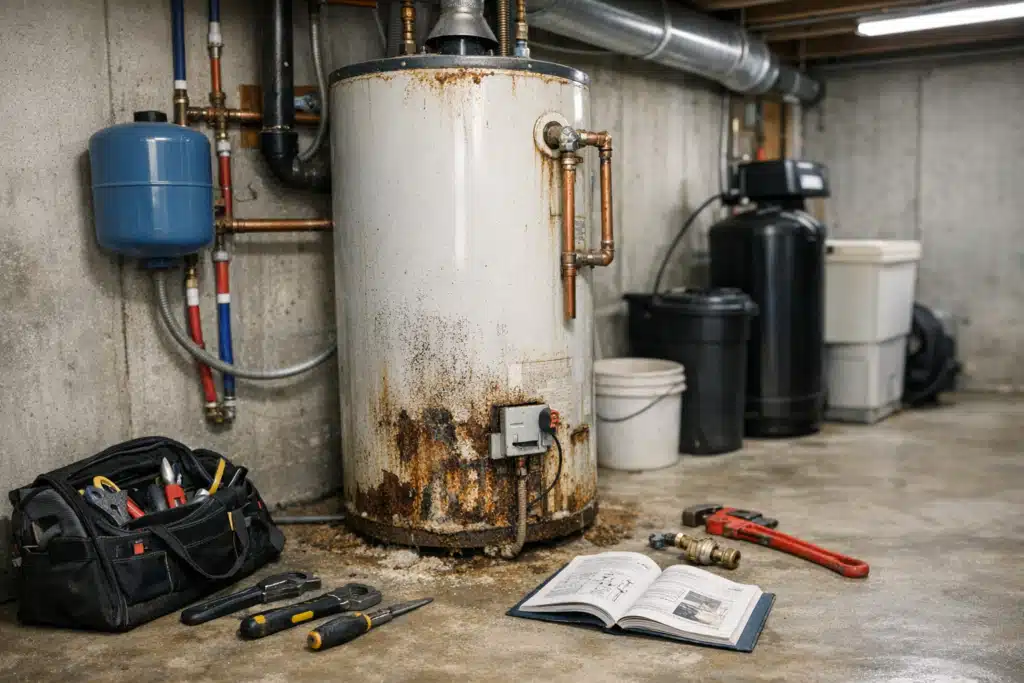
Water heaters take the worst of the hard water impact. As water heats, calcium drops out of solution and settles at the tank bottom. That layer of sediment insulates the burner from the water.
The result is a heater that works harder and lasts less. A conventional tank rated for 10 to 12 years may fail at 6 to 8 in hard water areas.
Signs your Arvada water heater is fighting scale include:
- Popping or rumbling sounds during heating cycles
- Longer recovery time between hot water uses
- Rusty or cloudy hot water at the tap
- Higher energy bills with no change in usage
Tankless units are not immune. Scale coats the heat exchanger and triggers error codes. Most tankless makers require annual descaling to keep the warranty valid.
Flushing Your Water Heater Matters More Here
Draining sediment once a year extends tank life along the Front Range. In softer-water regions, homeowners skip this for years without harm. In Colorado, that neglect leads to early replacement.
A yearly flush takes an hour and protects a $1,500 to $3,000 appliance. It is one of the best returns on a small maintenance task.
Hard Water and Your Appliances
Dishwashers and washing machines run water through fine internal parts. Scale narrows those passages and coats heating elements. Dishes come out spotted, and clothes feel rough.
Detergent works against hard water instead of your dishes. You use more soap for weaker results. Coffee makers and ice machines also clog with mineral crust.
Cost of Ignoring Hard Water in Colorado Homes
Small problems grow into big bills. Here is what hard water damage runs across the Denver metro:
- Faucet or fixture replacement: $150 to $450 each
- Water heater replacement: $1,500 to $3,500 installed
- Descaling a tankless unit: $150 to $300 per visit
- Repiping a scaled-up section: $1,000 to $4,000
- Dishwasher or washer repair: $200 to $600
A water softener costs less than one major appliance replacement. Most homes recover the cost within a few years of protected equipment.

 Posted on Google
How to Protect Your Colorado Plumbing Systems From Hard Water
Prevention costs far less than repair. These steps guard your home against mineral damage:
- Install a water softener. Ion-exchange units swap calcium for sodium and stop scale at the source.
- Flush your water heater yearly. Clear sediment before it insulates the tank.
- Clean aerators and showerheads. Soak them in vinegar every few months.
- Descale tankless units on schedule. Follow the maker’s annual requirement.
- Test your water hardness. Know your GPG before choosing equipment.
A whole-home softener protects every fixture and appliance at once. For homes wanting to skip the salt, a template-assisted crystallization system reduces scale without adding sodium.
Choosing the Right Softener for Your Home
Size the unit to your household and hardness level. A family of four at 12 GPG needs more grain capacity than a couple at 8 GPG. An undersized softener regenerates too often and wastes salt.
Placement matters too. The softener goes on the main line after the meter, before the water heater. That protects the heater and everything downstream.
Signs You Should Call a Plumber Now
Some hard water problems need a pro right away. Watch for these red flags in your Arvada home:
- Sudden drop in water pressure across the house
- Rusty water or visible corrosion at pipe joints
- A water heater making loud rumbling sounds
- Repeated clogs in the same fixture after cleaning
- Leaks near fittings where scale has built up
Catching these early prevents water damage and emergency repair costs. Our team tests hardness and inspects your system in one visit.
Why Local Knowledge Matters for Front Range Homes
Colorado’s water supply behaves differently than water in other states. A plumber who works here daily knows which neighborhoods run hardest. We have flushed heaters in Broomfield and repiped scaled lines in older Wheat Ridge homes.
That local track record means faster diagnosis and the right fix the first time. We match equipment to your actual water chemistry, not a generic estimate.
Conclusion
Hard water quietly damages pipes, water heaters, and appliances across the Denver metro. A softener, yearly heater flushing, and regular fixture cleaning protect your home and your budget. Acting early saves you from early appliance failure and costly repairs.
Ready to defend your home against hard water? Call or text Cardom Plumbing & Heating at 720‑775‑8322, email tomd@cardomcolorado.com, or visit https://www.cardomcolorado.com for service in Arvada and nearby communities.
Sources
- U.S. Geological Survey – Hardness of Water
- U.S. Department of Energy – Water Heaters
- U.S. Environmental Protection Agency – Ground Water and Drinking Water


