
Recent Posts
Categories
Seasonal Water Conservation Tips for Arvada Residents
Arvada summers push outdoor water use to its yearly peak, and a single leaky sprinkler zone can waste hundreds of gallons before you notice. Our region sits in a semi-arid climate, which means every drop counts and every fixture matters. These water conservation tips Arvada residents can apply will lower bills and reduce strain on your home’s plumbing.
This post breaks down what to do season by season, from spring sprinkler checks to winter pipe protection. You will get concrete numbers, local watering rules, and fixes we handle every week for homeowners across the Front Range.
Why Arvada’s Climate Demands Smart Water Habits
Arvada averages around 15 inches of precipitation per year. That is roughly a third of what wetter parts of the country receive. Water restrictions and tiered billing make waste expensive fast.
Denver Water and local providers charge higher rates as usage climbs. A household that trims outdoor irrigation by 20% can shave real money off summer bills. Seasonal habits matter more here than in most parts of the country.
How Front Range Seasons Change Your Water Use
Winter freezes stress pipes and cause hidden leaks. Summer heat drives lawn watering to 60% or more of total home use. Spring and fall are the best times for repairs and equipment upgrades.
Spring Water Conservation Tips for Arvada Homes
Spring is when outdoor systems come back online. It is also when winter freeze damage shows up. Catching problems now prevents summer waste.
Inspect Your Sprinkler System Before First Use
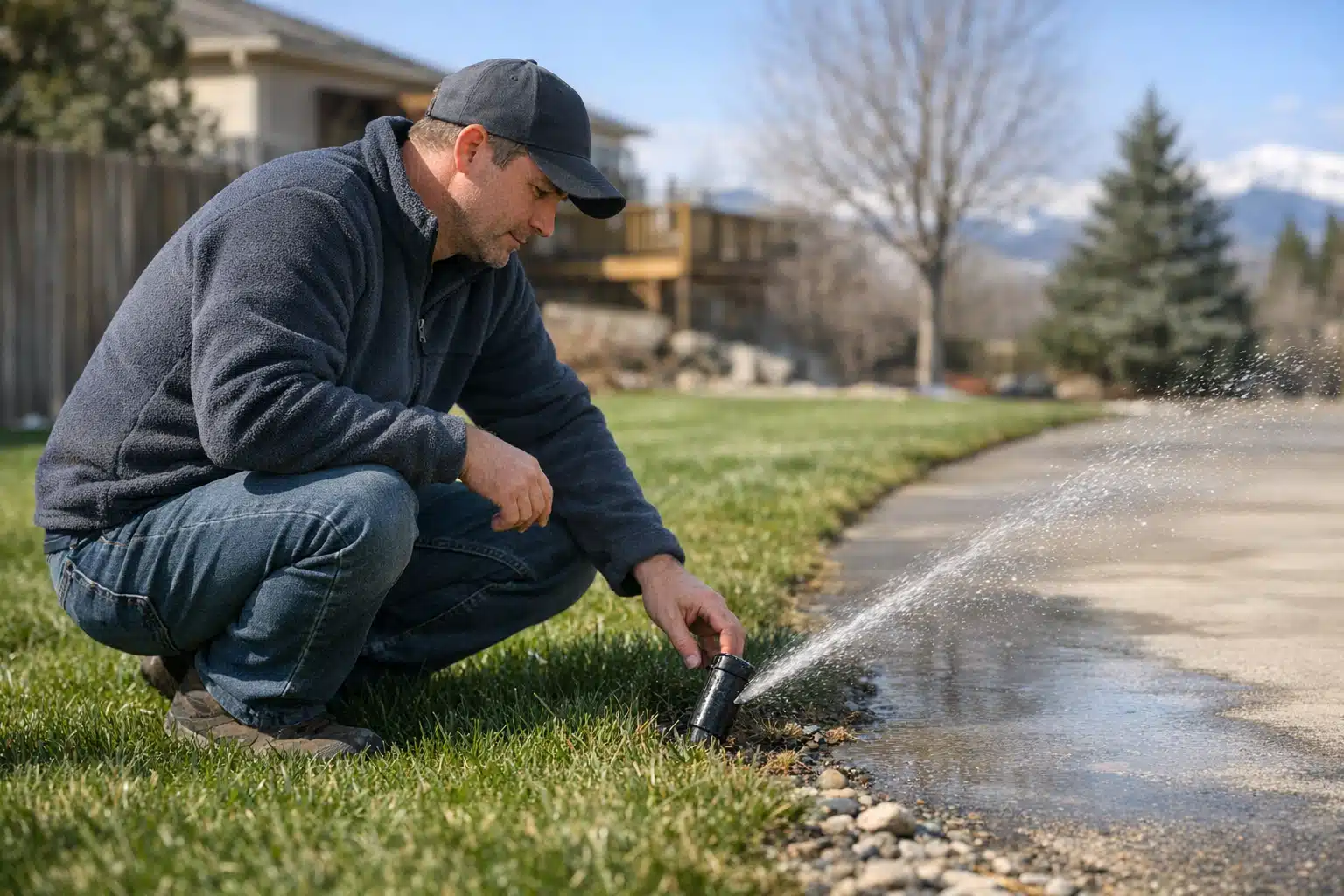
A cracked sprinkler head can leak 5 to 10 gallons per minute. Multiply that across a 20-minute cycle and the loss adds up fast. Walk each zone while it runs and watch for these issues:
- Broken or tilted heads spraying sidewalks or driveways
- Low-pressure zones that signal an underground line break
- Overspray hitting fences, homes, or the street
- Pooling water around valve boxes, a sign of leaks
Test for Hidden Leaks After Winter
Read your water meter at night, then check it eight hours later with no water use. Any movement points to a leak. Freeze-thaw cycles crack outdoor spigots and hose bibs, which drip behind walls unseen.
Summer Water Conservation Tips Arvada Residents Need Most
Summer is peak season for water waste in our area. Lawn irrigation, pools, and garden watering spike usage. Small changes here make the biggest difference on your bill.
Follow Local Watering Schedules
Most Front Range providers limit watering to before 10 a.m. and after 6 p.m. Midday watering loses up to 30% to evaporation. Follow your provider’s assigned days to stay compliant and cut waste.
Adjust Your Irrigation for Denver-Area Heat
Deep, infrequent watering builds stronger roots than daily light watering. Try these steps for a healthier lawn using less water:
- Water two to three days per week, not daily
- Run cycles in short bursts to prevent runoff on clay soil
- Install a smart controller that skips watering after rain
- Set your mower higher so taller grass shades the soil
Upgrade to Water-Saving Fixtures
Older toilets use up to 3.5 gallons per flush. A WaterSense-labeled model uses 1.28 gallons. Swapping fixtures cuts indoor use without sacrificing performance:
- Low-flow showerheads save around 2,700 gallons per year
- WaterSense faucets reduce flow by 30% or more
- High-efficiency toilets can save a family thousands of gallons yearly
Fall Seasonal Plumbing Advice for Water Savings
Fall is prep season. The work you do now protects your home and lowers winter water loss. It is the right window for repairs before the freeze.
Winterize Outdoor Plumbing
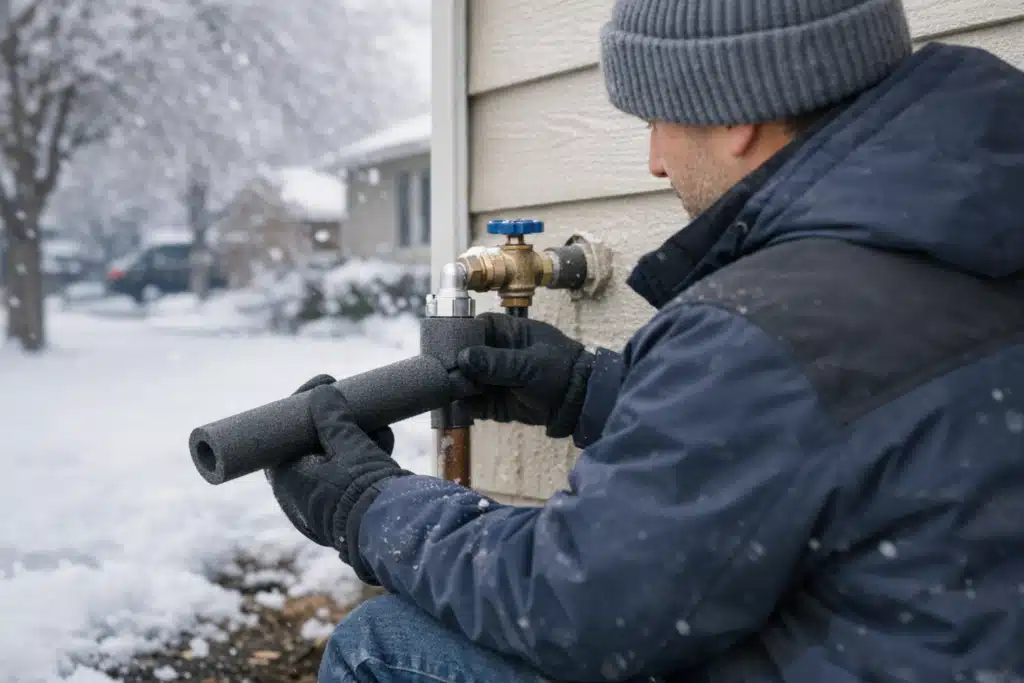
Disconnect and drain garden hoses before the first hard freeze. A frozen hose bib can burst the pipe behind it. Follow this order:
- Shut off the interior valve feeding each outdoor spigot
- Open the outdoor faucet to drain remaining water
- Blow out your sprinkler lines with compressed air
- Insulate exposed pipes in crawl spaces and garages
Check Your Water Heater
Sediment builds up in tanks over a year of use. Arvada’s mineral-heavy water speeds this along. Flushing the tank each fall improves efficiency and prevents wasted water from a failing unit.
Winter Water Conservation and Freeze Protection
Winter waste comes from burst pipes and running faucets. A single burst pipe can release hundreds of gallons per hour. Prevention protects both water and your home.
Prevent Frozen Pipes the Right Way
When temperatures drop below 20°F, pipes along exterior walls are at risk. Homes in older Arvada and Wheat Ridge neighborhoods face higher odds due to uninsulated runs. Take these steps on cold nights:
- Let a faucet drip slightly to keep water moving
- Open cabinet doors under sinks on exterior walls
- Keep the thermostat at 55°F or higher when away
- Seal drafts near pipe entry points in the basement
Know Where Your Main Shutoff Is
If a pipe bursts, seconds matter. Locate your main shutoff valve before winter arrives. It is usually in the basement or crawl space near the front of the house.
5 Common Water-Wasting Problems in Arvada Homes
We see the same leaks repeatedly across Arvada, Westminster, and Broomfield homes. Here are the top culprits and what they cost:
- Running toilets waste up to 200 gallons per day from a bad flapper
- Dripping faucets lose over 3,000 gallons a year at one drip per second
- Sprinkler breaks drain water underground before you notice
- Failing water heaters leak slowly and raise energy costs
- Old irrigation timers that water during rain or overnight freezes
What Repairs Usually Cost
A toilet flapper replacement is a low-cost fix, often under $50 in parts. Faucet repairs and sprinkler head swaps run modestly higher. Catching a leak early beats paying for water damage restoration later.
How Arvada’s Hard Water Affects Conservation
Our area has moderately hard water with high mineral content. Scale buildup clogs aerators, showerheads, and fixtures. Clogged fixtures push people to run water longer to get the same flow.
Cleaning aerators every few months restores flow and cuts waste. A water softener extends the life of fixtures and appliances. Either step supports better water use over time.
Quick Wins You Can Do This Weekend
Not every improvement takes a plumber. These small changes add up across a year:
- Fix that running toilet with a new flapper and fill valve
- Add faucet aerators to kitchen and bathroom sinks
- Collect rainwater in a barrel for garden use, per Colorado limits
- Run full loads only in dishwashers and washing machines
- Shorten showers by two minutes to save 1,500 gallons yearly
Conclusion
Smart water habits shift with each Arvada season, from spring sprinkler checks to winter freeze protection. Fixing leaks early, upgrading fixtures, and following local watering schedules cut both waste and cost. This seasonal plumbing advice keeps your home efficient all year.
Need help with a leak, water heater flush, or fixture upgrade in Arvada or nearby communities? Call or text Cardom Plumbing & Heating at 720‑775‑8322, email tomd@cardomcolorado.com, or visit https://www.cardomcolorado.com.


