Cardom Plumbing & Heating offers comprehensive water heater services in Lakewood, CO, addressing issues like inconsistent hot water and strange noises. Their expertise includes installation, maintenance, and repairs tailored to the unique challenges posed by the local climate and water quality.
They provide a full range of services, including tank and tankless installations, sediment flushing, and system replacements. Professional diagnosis is key to ensuring safety and efficiency in water heater operation. Their technicians are licensed and trained to handle the specific needs of Lakewood's diverse housing stock.
Water Heater Services in Lakewood, CO That cold shock during your morning shower isn’t just unpleasant – it’s a signal that your water heater demands attention.
Whether you’re dealing with lukewarm water, strange rumbling sounds from your tank, or a complete loss of hot water, these symptoms point to underlying issues that worsen without professional intervention.
What does a cold shower indicate about your water heater?
A cold shower often indicates that your water heater needs attention due to underlying issues. Symptoms like lukewarm water or strange noises from the tank suggest that the unit may be malfunctioning and could require professional repair to prevent further complications.
Water Heater Services in Lakewood, CO
That cold shock during your morning shower isn't just unpleasant – it's a signal that your water heater demands attention. Whether you're dealing with lukewarm water, strange rumbling sounds from your tank, or a complete loss of hot water, these symptoms point to underlying issues that worsen without professional intervention.
Water heater service encompasses the full spectrum of care for your home's hot water system. This includes tank and tankless unit installation, sediment flushing, anode rod replacement, thermostat calibration, burner assembly cleaning, and complete system replacements. Professional diagnosis matters because water heaters involve complex interactions between gas lines, electrical components, water pressure, and temperature controls – any of which can create safety hazards or efficiency losses when improperly handled.
Lakewood's unique position along the Front Range creates specific challenges for water heaters. The city's semi-arid climate, mineral-rich water supply from Denver Water, and housing stock ranging from 1950s ranches to modern construction all influence how your water heater performs and ages.
Key Benefits of Professional Water Heater Service
Restored hot water capacity and consistent temperature delivery throughout your home
Extended equipment lifespan through proper maintenance and timely repairs
Reduced energy bills by addressing efficiency-robbing sediment buildup and component wear
Safety assurance through proper gas line connections, venting, and pressure relief valve testing
Cardom Plumbing & Heating provides Water Heater services in all neighborhoods of Lakewood including Applewood, Avenida Lakewood 55+ Active Living, Barnum West, Camden Lakeway, Edgemont, Green Mountain Village, Heron Shores, Marston, Nevada Place, Parkview Terrace, Ponderosa Ridge, Rooney Valley, Sage Corner, Shadow Hills, Spivak, and West Link at Oak Station.
Lakewood sits at approximately 5,500 feet elevation, and this altitude affects water heater performance in ways many homeowners don't realize. Water boils at lower temperatures at elevation, which changes how your unit operates. Gas-fired water heaters require specific altitude adjustments to their burner assemblies – units installed without these modifications run inefficiently and wear out faster.
The water supplied to Lakewood homes carries dissolved minerals from mountain snowmelt and reservoir sources. This mineral content, while safe to drink, accumulates inside water heater tanks as scale deposits. Over years, this sediment layer insulates the tank bottom from the burner, forcing the unit to work harder and driving up your gas bill while reducing available hot water volume.
Local Factors Affecting Your Water Heater
Elevation-related combustion changes – Gas appliances at altitude receive less oxygen per cubic foot of air, requiring adjusted air-to-fuel ratios
Hard water mineral deposits – Calcium and magnesium accumulate faster in Lakewood's water supply, coating heating elements and tank interiors
Temperature swings – Lakewood experiences 50-degree temperature shifts within 24 hours, stressing tank materials and connections
Aging infrastructure in established neighborhoods – Homes near Belmar, Green Mountain, and older Lakewood subdivisions often have original water heaters past their service life
Cold garage installations – Many Lakewood homes have water heaters in unheated garages, forcing units to work harder during winter months
Incoming water temperature variations – Ground temperatures affect supply water temperature, with winter incoming water often 20 degrees colder than summer
Warning Signs Lakewood Homeowners Should Monitor
Your water heater communicates problems before failing completely. Watch for these indicators:
Rusty or discolored hot water – often indicates tank corrosion or failing anode rod
Popping or rumbling sounds during heating cycles – sediment buildup on tank bottom
Water pooling around the unit base – tank corrosion, valve failure, or connection leaks
Inconsistent water temperature – thermostat malfunction or dip tube deterioration
Pilot light repeatedly extinguishing – thermocouple failure or venting issues
Hot water running out faster than usual – sediment displacement or element failure
Our approach to water heater service begins with understanding exactly what's happening with your system before recommending any repairs or replacements. We've developed diagnostic protocols specifically for the conditions Lakewood water heaters face.
Our Water Heater Service Process
Initial assessment and symptom documentation – We listen to your concerns and gather information about when problems started, what you've noticed, and your hot water usage patterns
Visual inspection of the complete system – Examining the tank exterior, connections, venting, gas lines, and surrounding area for visible issues
Diagnostic testing – Checking water temperature at multiple fixtures, testing pressure relief valve operation, measuring gas pressure, and inspecting combustion characteristics
Sediment and tank condition evaluation – Draining a sample to assess sediment accumulation and water quality inside the tank
Component testing – Verifying thermostat accuracy, thermocouple function, and anode rod condition
Findings review and options presentation – Explaining what we found, what it means for your system, and presenting repair versus replacement considerations
Service execution – Completing agreed-upon work with attention to manufacturer specifications and local code requirements
Post-service testing and verification – Confirming proper operation, checking for leaks, and verifying temperature output
Techniques and Methods We Employ
Thermal imaging to identify heat loss and insulation gaps
Combustion analysis for gas-fired units to verify safe, efficient operation
Water quality testing to determine mineral content affecting your specific unit
Pressure testing to identify leaks in connections and fittings
Anode rod inspection using specialized extraction tools
Tankless unit descaling using food-grade cleaning solutions
Throughout the service process, we keep you informed about what we're finding and why it matters. No work proceeds without your understanding and approval.
Why Choose Cardom Plumbing & Heating
Cardom Plumbing & Heating brings licensed, insured technicians to every water heater service call. Our team holds certifications for both gas and electric water heater installation and repair, with specific training on high-efficiency and tankless systems. We maintain ongoing education requirements to stay current with evolving technology and code changes affecting Lakewood installations.
Our presence in the Lakewood community means we understand the specific challenges your water heater faces. We've serviced units in Green Mountain Village homes built in the 1970s, newer construction in Solterra, and everything between. This local experience translates into faster, more accurate diagnoses because we've seen how Lakewood's conditions affect different water heater brands and installation types.
What Sets Our Service Apart
Responsive scheduling – We recognize that no hot water constitutes an emergency and prioritize same-day and next-day appointments
Transparent communication – You'll understand what's wrong, why it happened, and what options exist before any work begins
Quality-focused installation – New water heaters receive proper altitude adjustments, expansion tank installation where required, and code-compliant venting
Follow-up accountability – We stand behind our work and remain available for questions after service completion
Modern diagnostic equipment – Our tools allow us to identify problems accurately rather than guessing
We treat your home with respect – wearing shoe covers, protecting flooring, and cleaning up completely after every job. Our technicians arrive in marked vehicles with fully stocked parts inventories, reducing the need for multiple visits to complete common repairs.
Housing Characteristics & Water Heater Considerations
Lakewood's housing stock reflects decades of development patterns, each era bringing different water heater installation practices and challenges. Understanding your home's construction period helps predict what water heater issues you might encounter.
Housing Era Breakdown and Implications
1950s-1960s ranch homes – Found throughout central Lakewood, these homes often have water heaters in utility closets or basements with original galvanized supply lines that restrict flow and introduce corrosion particles
1970s-1980s split-levels and bi-levels – Common in Applewood and Green Mountain areas, frequently featuring water heaters in unfinished basements with atmospheric venting that may not meet current codes
1990s-2000s two-story homes – Neighborhoods like Bear Creek and Lakewood Estates often have water heaters in attached garages, requiring freeze protection considerations and longer pipe runs to upper-floor bathrooms
2010s-present new construction – Solterra and infill developments typically feature high-efficiency units with power venting or tankless systems requiring specific maintenance protocols
Installation Location Factors
Where your water heater sits within your home significantly affects its performance and longevity. Lakewood homes present several common scenarios:
Garage installations – Ambient temperatures drop below freezing during winter nights, forcing units to work harder and increasing standby heat loss
Basement locations – Generally stable temperatures but potential flood exposure during heavy rain events
Utility closet placement – Limited ventilation can affect combustion air supply for gas units
Outdoor installations – Some newer tankless units are installed externally, requiring freeze protection kits for Lakewood winters
Homes built before 1990 often have water heaters that have been replaced at least once, but the original installation infrastructure – gas lines, venting, and water connections – may need updating to support modern high-efficiency equipment.
Recent Work
Water Heater Servicing - Lakewood
Problem:Service water heater and test for leaks
Found:Found small drip
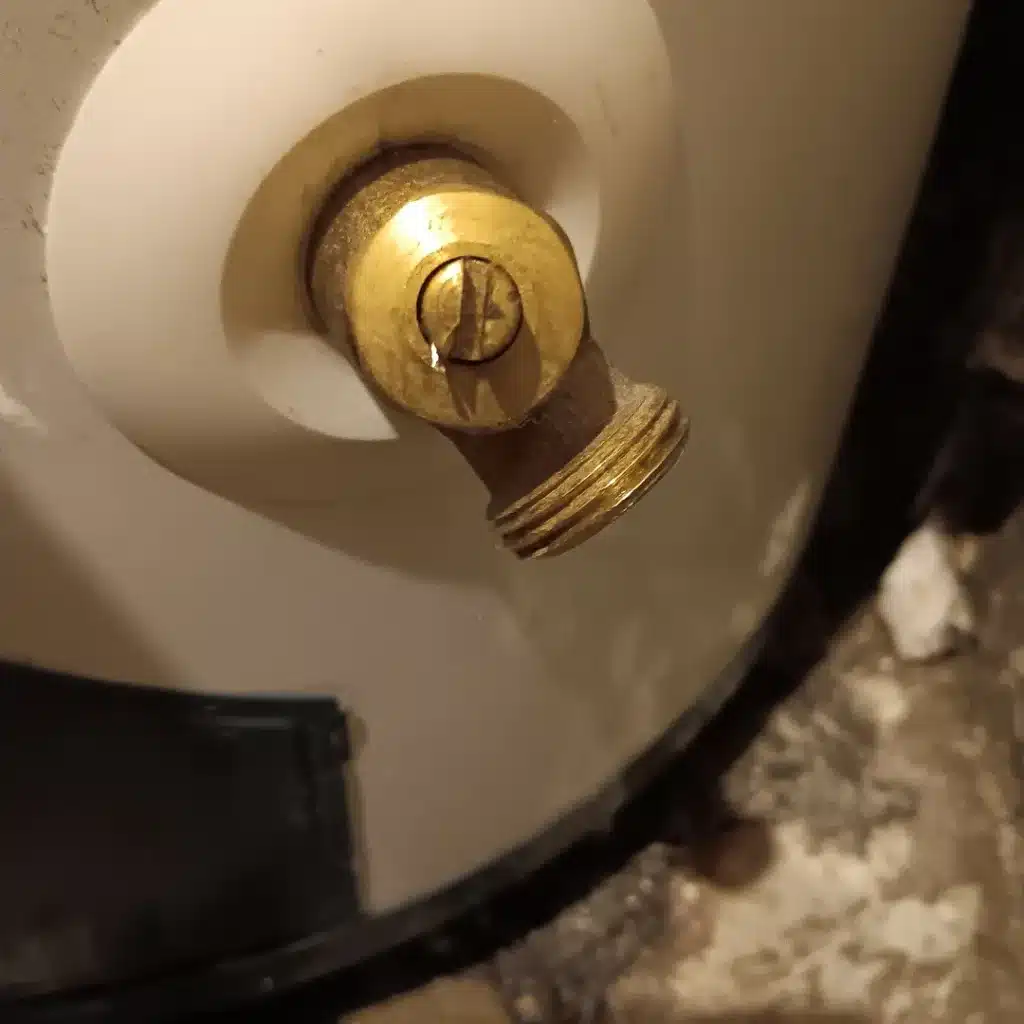
Fixed:Drained five gallons of water from boiler drain at base of water heater. Turned water heater back on and checked for drips. Tightened boiler drain.
Outcome:Tested and no leak.
Reinstall Water Heater - Lakewood
Problem:Installing water heater
Found:New water heater
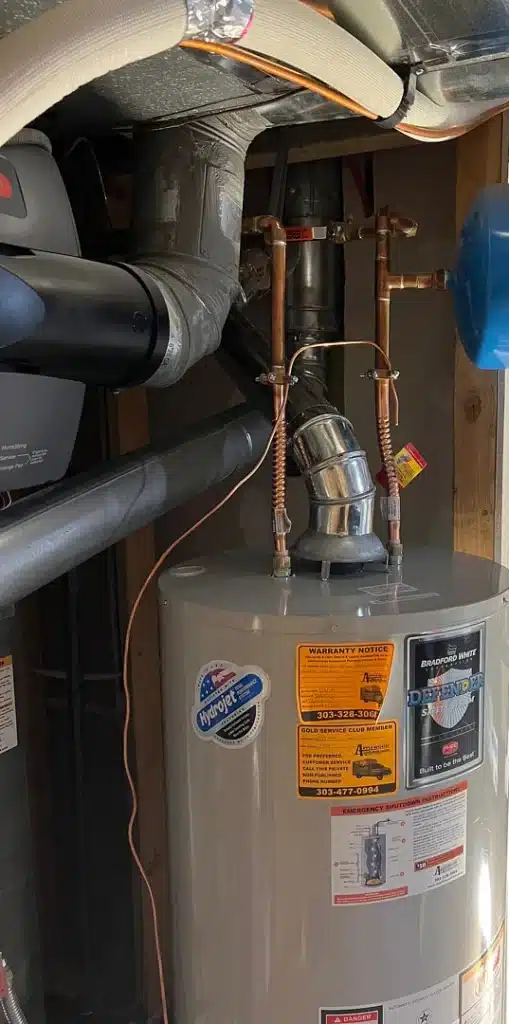
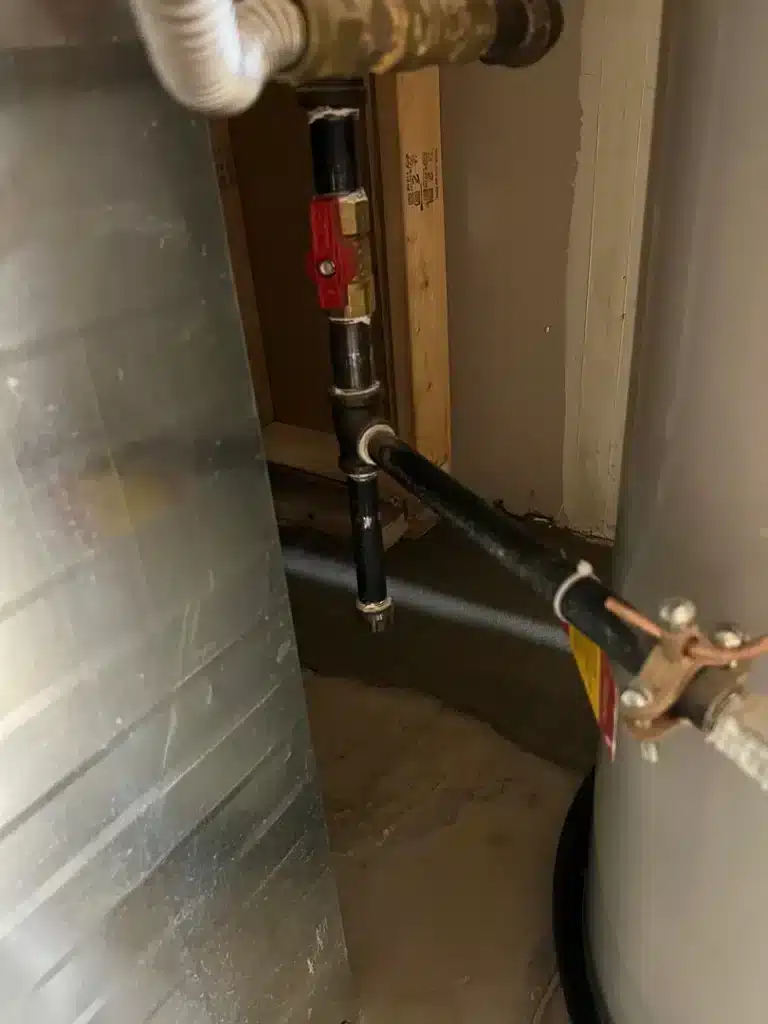
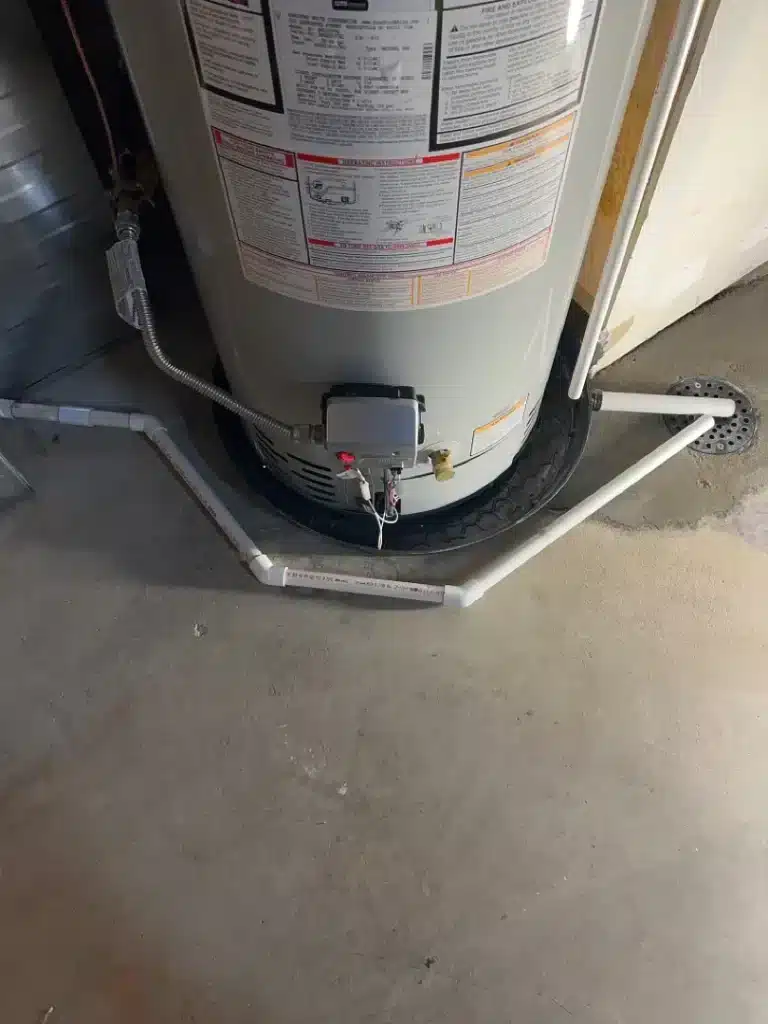
Fixed:Re install water heater, no material needed everything was to code, I did have to rerun condensate from furnace.
Environmental Conditions & Water Heater Implications
Lakewood's environmental conditions create a demanding operating environment for water heaters. From water chemistry to climate extremes, these factors directly influence equipment performance and service life.
Water Quality Characteristics
Denver Water supplies Lakewood through an extensive treatment and distribution system. The water characteristics affecting your water heater include:
Moderate hardness levels – Typically 50-150 mg/L calcium carbonate, enough to create scale buildup over time without being classified as "hard" water
Slightly alkaline pH – Generally 7.5-8.5, which can accelerate certain corrosion processes in tank interiors
Chloramine disinfection – Used instead of chlorine, chloramines can affect certain rubber components in water heater systems over extended periods
Seasonal variation – Spring snowmelt introduces different mineral profiles than late-summer reservoir water
Climate Impacts on Water Heater Systems
Lakewood experiences approximately 300 days of sunshine annually, but also sees significant temperature extremes that stress water heater components.
Winter temperature drops – Incoming water temperatures can fall to 40°F during cold snaps, requiring your water heater to work 30% harder than summer months
Rapid temperature swings – Chinook winds can raise temperatures 40 degrees in hours, causing expansion and contraction stress on tank materials and fittings
Low humidity – Semi-arid conditions can affect certain seals and gaskets over time
Hail exposure – Outdoor tankless units face potential damage during Colorado's severe spring and summer storms
Soil and Drainage Considerations
Lakewood's clay-heavy soils expand and contract with moisture changes, which can affect water heater installations in several ways. Foundation movement may stress water and gas connections over time. Basement installations face potential water intrusion during heavy rain events when clay soils become saturated and hydrostatic pressure builds against foundation walls.
Water Infrastructure and Municipal Data in Lakewood
Understanding Lakewood's water infrastructure provides context for water heater performance and maintenance needs. The city's water system, managed primarily through Denver Water with some areas served by Consolidated Mutual Water Company, delivers approximately 15 million gallons daily to Lakewood residents through an aging but maintained distribution network.
Infrastructure Age and Implications
Much of Lakewood's water distribution infrastructure dates to the city's major growth periods:
Pre-1970 mains – Cast iron and ductile iron pipes serving older neighborhoods can introduce trace iron particles that accumulate in water heater tanks
1970s-1990s installations – Copper service lines predominate, generally reliable but subject to pinhole leak development in certain soil conditions
Modern infrastructure – Newer developments feature PEX and CPVC, reducing corrosion concerns but requiring different connection approaches at water heaters
Water Pressure Variations
Lakewood's topography – ranging from about 5,400 feet near Bear Creek to over 6,000 feet in the Green Mountain area – creates pressure zone challenges. Homes in higher elevation neighborhoods often experience pressure fluctuations that affect water heater performance and longevity. Pressure reducing valves, when improperly set or failing, can cause water heater relief valves to discharge or tanks to experience excessive stress.
Utility Data Affecting Water Heater Decisions
Natural gas availability – Xcel Energy provides natural gas throughout most of Lakewood, making gas water heaters the predominant choice
Electric rates – Higher than national average, making electric water heaters more expensive to operate and heat pump units increasingly attractive
Rebate programs – Both Xcel Energy and Denver Water periodically offer efficiency rebates for high-efficiency water heater installations
Permit requirements – Lakewood requires permits for water heater replacements, with inspections verifying proper installation and code compliance
This infrastructure context helps explain why certain water heater problems occur more frequently in specific Lakewood neighborhoods and informs our recommendations for equipment selection and maintenance scheduling.
Common signs include inconsistent water temperature, strange noises like rumbling or popping, and leaks around the unit. If you experience a sudden loss of hot water or notice a decrease in water pressure, these are also indicators that your water heater may need professional attention.
It's recommended to have your water heater serviced at least once a year. Regular maintenance helps identify potential issues early, improves efficiency, and extends the lifespan of the unit.
The average lifespan of a traditional tank water heater is about 10 to 15 years, while tankless models can last up to 20 years with proper maintenance. Factors like water quality and usage patterns can influence how long your unit lasts.
While some homeowners may attempt a DIY installation, it's generally best to hire a professional. Water heaters involve complex connections to gas lines, electrical systems, and plumbing, which can pose safety risks if not handled correctly.
If you notice a leak, it's important to turn off the power supply and the water supply to the unit immediately. Then, contact a professional plumber to assess the situation and perform necessary repairs to prevent further damage.
Tankless water heaters can be a great investment for many homeowners. They provide hot water on demand, which can save space and reduce energy costs over time, especially for households with high hot water usage.
To improve efficiency, consider flushing the tank regularly to remove sediment buildup, insulating the tank and pipes, and setting the thermostat to an optimal temperature. Regular professional maintenance also plays a key role in keeping your unit running efficiently.