
Recent Posts
Categories
Denver’s Unique Plumbing Challenges: Adapting to Mile-High City Conditions
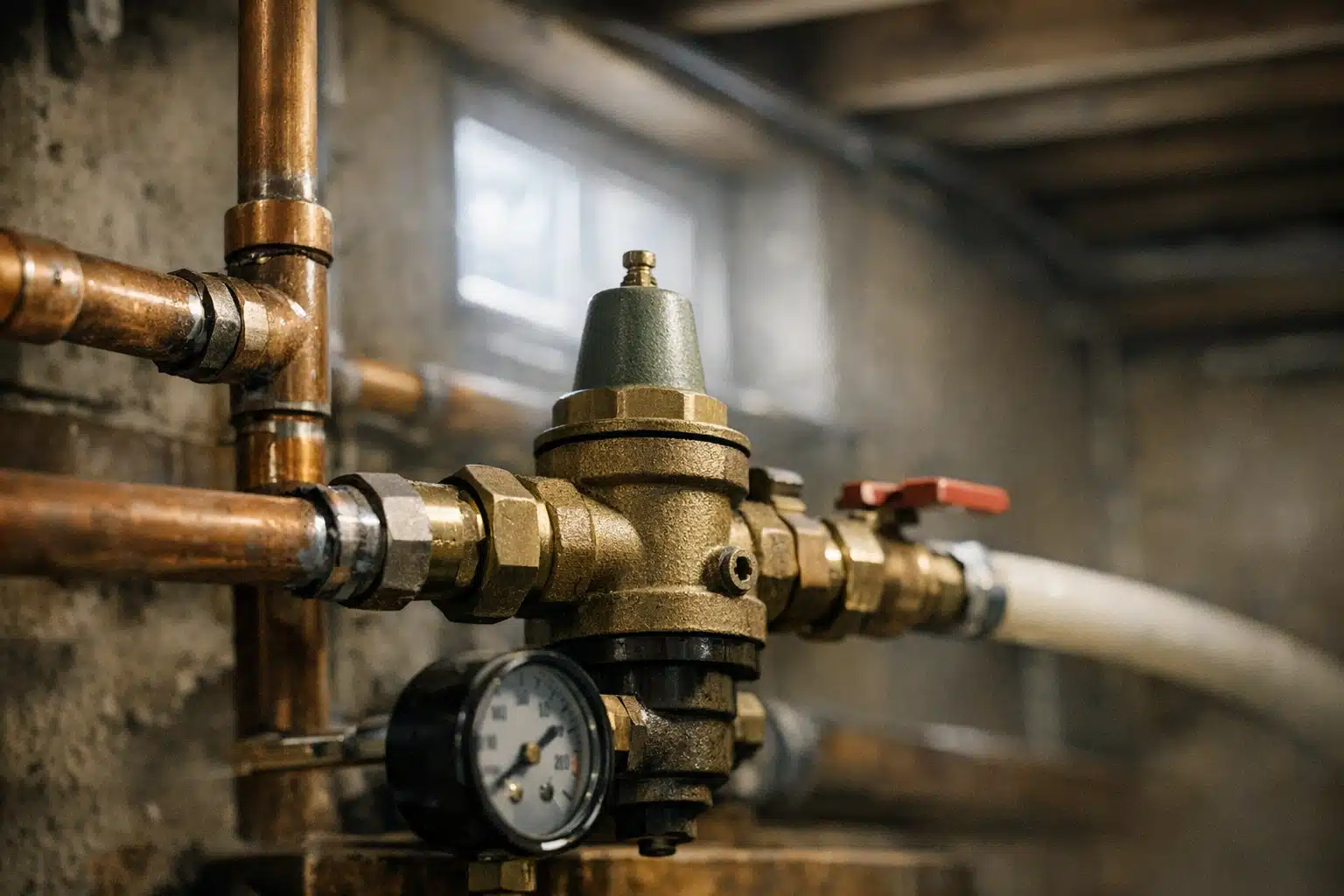
Cardom Plumbing & Heating explains how Denver's 5,280-foot elevation creates specific plumbing problems including high water pressure, hard water damage, extreme temperature swings, and challenging soil conditions that require specialized solutions.
- Denver homes often have water pressure exceeding 80 PSI, causing pipe joint failures and water heater leaks. We install pressure reducing valves on 70% of service calls in Arvada and Westminster.
- Hard water with 6-8 grains per gallon of minerals destroys fixtures faster, requiring annual descaling for tankless heaters and anode rod replacement every 2-3 years instead of the typical five.
- Temperature swings of 40 degrees in a single day stress pipes, while expansive clay soil cracks sewer lines from the 1970s and 1980s. We recommend pressure-assist toilets and high-altitude aerators for proper performance.
Denver's elevation of 5,280 feet impacts plumbing because municipal water systems pump at higher pressures to compensate for the altitude. This increased pressure creates additional stress on residential pipes and fixtures, leading to faster wear and potential leaks. Homeowners in the Mile-High City often need pressure-regulating valves and more frequent plumbing maintenance to protect their systems from altitude-related damage.
High Altitude Creates Unique Water Pressure Problems in Denver Homes
Denver’s 5,280-foot elevation affects water pressure in ways most homeowners don’t expect. Municipal water systems pump at higher pressures to compensate for altitude, but this creates stress on your home’s pipes and fixtures.
Water pressure in Denver metro homes often exceeds 80 PSI, well above the recommended 40-60 PSI range. This excess pressure causes pipe joints to fail prematurely and water heaters to develop leaks around relief valves.
We install pressure reducing valves on 70% of our service calls in Arvada and Westminster. These devices protect your plumbing system from the constant strain of high altitude plumbing conditions that plague Front Range communities.
Signs Your Home Has Dangerous Water Pressure
- Water hammering sounds when faucets turn off quickly
- Toilet fill valves that won’t shut off completely
- Pinhole leaks in copper pipes near joints
- Water heater relief valves that drip constantly
- Faucet aerators that blow off under normal use
Denver’s Hard Water Destroys Plumbing Fixtures Faster
Denver water contains 6-8 grains per gallon of dissolved minerals, making it moderately hard. Combined with high pressure, these minerals build up rapidly inside pipes and fixtures.
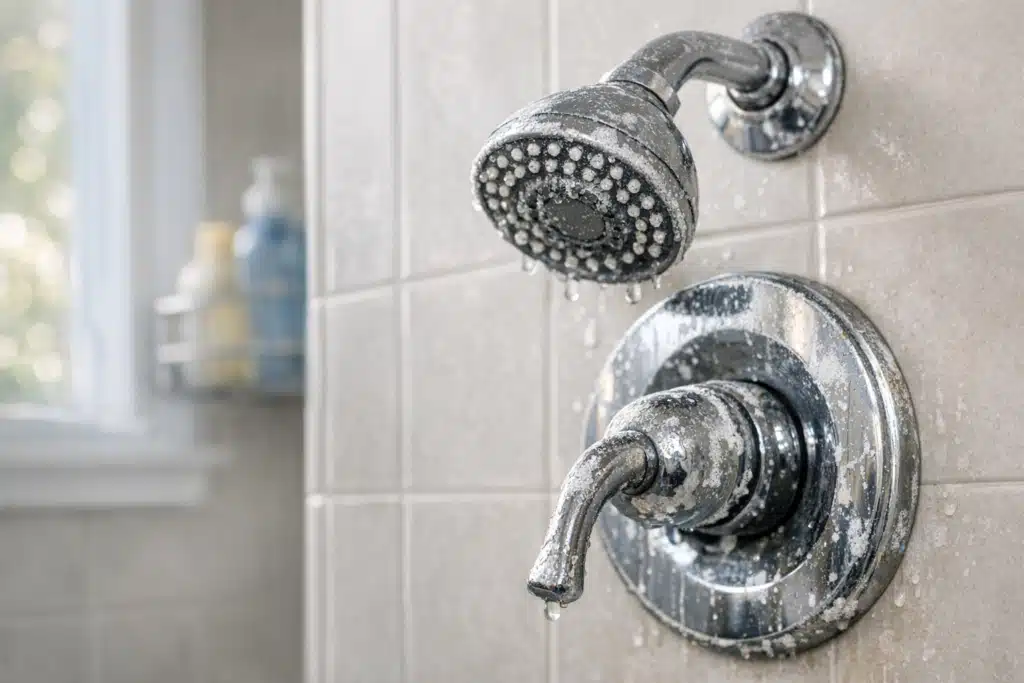
Tankless water heaters fail within 3-5 years in Denver without proper maintenance. The mineral buildup clogs heat exchangers, forcing the units to overheat and shut down during peak demand.
We recommend annual descaling for all tankless units in Broomfield and Westminster homes. Traditional tank water heaters need anode rod replacement every 2-3 years instead of the typical 5-year interval.
How Hard Water Affects Different Plumbing Components
Shower heads and faucets clog with white mineral deposits within 6 months of installation. Low-flow fixtures suffer the most because smaller openings trap minerals faster.
Toilet fill valves stick open when minerals coat the rubber flapper seal. This causes toilets to run constantly, wasting hundreds of gallons monthly.
Washing machine supply lines develop internal buildup that reduces water flow to a trickle. We replace these hoses twice as often in Denver compared to softer water regions.
Extreme Temperature Swings Challenge Denver Plumbing Systems
Denver’s weather can drop 40 degrees in a single day, causing pipes to expand and contract rapidly. This thermal stress loosens pipe joints and creates leaks that appear without warning.
Outdoor hose bibs freeze even when homeowners think they’ve drained them properly. Denver’s dry air allows moisture to evaporate from pipe surfaces, but trapped water inside still freezes solid.
We see burst pipe emergencies spike during February and March when daily temperature swings exceed 30 degrees. Pipes that survived January’s steady cold fail when weather starts fluctuating wildly.
The Most Vulnerable Areas in Front Range Homes
- North-facing exterior walls where pipes never receive direct sunlight
- Crawl spaces under kitchen additions where insulation gaps exist
- Garage water lines that feed upstairs bathrooms
- Main water service lines buried less than 4 feet deep
- Outdoor irrigation systems with manual drain valves
Denver Plumbing Challenges Include Unique Soil Conditions
Colorado’s expansive clay soil shifts dramatically with moisture changes. Sewer lines installed in the 1970s and 1980s crack when soil movement exceeds pipe flexibility limits.
We perform more sewer line replacements in Arvada neighborhoods built during this era. The original clay pipes couldn’t withstand decades of soil expansion and contraction cycles.
Tree roots find these cracked sewer lines irresistible water sources. Cottonwoods and willows common in Denver landscaping send roots 50+ feet to reach damaged pipes.
Identifying Sewer Line Problems Before They Become Disasters
Slow drains throughout your home indicate main sewer line issues, not individual fixture problems. Multiple drains backing up simultaneously means roots or soil movement damaged your main line.
Soggy spots in your yard during dry weather signal underground leaks. Denver’s low humidity makes these wet areas obvious against normally dry landscaping.
Unusual green grass patches over sewer lines show where nutrients from leaking waste lines fertilize specific areas. This creates distinct color differences visible from spring through fall.

 Posted on Google
Winter Heating Demands Stress Denver Water Heaters
Denver water heaters work harder than units in moderate climates because incoming water temperatures drop to 35°F during winter months. Your water heater must raise temperatures 70+ degrees instead of the typical 50-degree increase.
Gas water heaters in Westminster and Wheat Ridge homes burn 40% more fuel during December through February. Electric units strain heating elements, causing premature failure during peak winter demand.
We install water heater blankets and pipe insulation on 90% of our winter service calls. These simple additions reduce heat loss and prevent the cycling that shortens equipment life.
Maximizing Water Heater Efficiency in Colorado’s Climate
Set your water heater to 120°F maximum temperature. Higher settings waste energy and increase mineral buildup inside the tank.
Flush your water heater tank every six months to remove sediment that accumulates faster in hard water areas. This sediment acts as insulation, forcing your heater to work harder.
Replace your water heater anode rod every two years instead of waiting for complete deterioration. Colorado’s mineral-rich water consumes these sacrificial metals rapidly.
High Altitude Affects Fixture Performance and Installation
Toilet performance suffers at Denver’s elevation because reduced air pressure affects flushing dynamics. Standard toilets designed at sea level don’t generate the same bowl evacuation force.
We recommend pressure-assist toilets for Denver metro installations. These units use water line pressure to compress air in a secondary tank, creating powerful flushes regardless of elevation.
Faucet aerators designed for sea level create excessive turbulence in Denver’s thin air. We install high-altitude aerators that reduce splash and improve water stream quality.
Installation Considerations for High Altitude Plumbing
Pipe venting requires larger diameter stacks because reduced air density affects drainage flow rates. Code requirements in Denver metro areas reflect these altitude-specific needs.
Water heater venting needs careful calculation for proper draft in thin air. Improper venting causes carbon monoxide backdrafts that create safety hazards.
Fixture mounting must account for building movement caused by Colorado’s extreme temperature variations. We use flexible connections where rigid mounting would fail.
Professional Solutions for Front Range Plumbing Challenges
Denver’s unique conditions require specialized knowledge and equipment that general handymen lack. We stock high-altitude specific parts and understand local soil conditions that affect every installation.
Our service trucks carry pressure reducing valves, high-altitude aerators, and freeze-resistant hose bibs designed for Colorado’s climate. These aren’t standard items at big box stores.
Understanding Denver plumbing challenges means knowing when standard solutions won’t work. We’ve adapted our techniques through years of serving Front Range communities with their specific environmental demands.
Don’t let Denver’s unique plumbing challenges catch you unprepared. Contact Cardom Plumbing & Heating at 720-775-8322 for expert service designed specifically for Arvada and surrounding Front Range communities.
Sources
- Denver Water – Water Quality Reports
- National Weather Service Boulder – Climate Data
- EPA – Ground Water and Drinking Water Standards
- Colorado Department of Public Health – Water Quality Control


