
Recent Posts
Categories
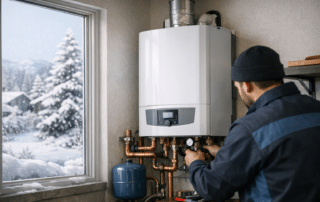
Choosing the Right Boiler for High-Elevation Homes in the Front Range
Understanding Boiler Performance at High Elevation When your heating system fails during a December snowstorm in Arvada, choosing the right replacement becomes critical. Boiler high elevation performance differs significantly from sea-level installations due to reduced atmospheric pressure and oxygen levels. At 5,400 feet above sea level, Arvada homeowners face unique heating challenges. Lower air density [...]
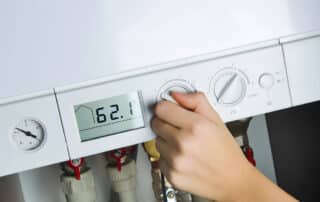
Boiler Won’t Ignite After Storm? Safe Reset Checklist
After a severe storm causes a power outage or disrupts gas service, it’s not uncommon for a home boiler to fail to ignite once utilities are restored. Many modern boilers automatically shut down during power interruptions to protect the system, and sometimes a simple reset or quick system check is all that’s needed to get [...]
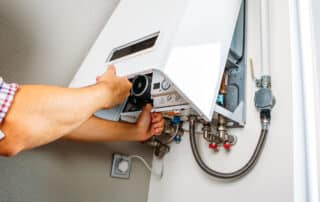
Boiler Short-Cycling: Causes and Fixes
When your boiler turns on and off repeatedly in short bursts, it’s a sign of a problem known as short-cycling. Instead of running long enough to heat your home efficiently, the system shuts down and restarts repeatedly, wasting energy and placing unnecessary strain on critical components. Over time, this constant cycling can increase utility bills, [...]

Hydronic Heat vs. Forced Air: How Boiler Systems Work in Colorado Homes
Colorado homeowners choosing a heating system face a long-term decision that affects comfort, energy bills, and equipment lifespan. Hydronic systems circulate hot water through pipes in floors, walls, or baseboards, delivering consistent radiant heat. Forced air systems push heated air through ductwork to warm rooms via convection. Colorado’s high elevation, cold winters, and dry air [...]
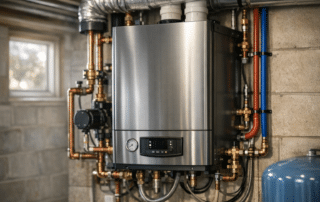
Understanding Boiler Efficiency Ratings: What Do They Mean?
Your Arvada home's heating bills seem higher every winter, and you suspect your old boiler might be the culprit. Understanding boiler efficiency ratings can help you make smart decisions about repairs, replacements, and energy savings. This guide explains what efficiency ratings mean, how they impact your energy costs, and when it makes sense to upgrade. [...]

Why Denver’s Mid-Century Homes Are Ideal for Radiant Retrofits
Denver’s mid-century homes, built between 1945 and 1970, are uniquely suited for radiant heating retrofits. These post-war houses often feature concrete slab foundations, open floor plans, and straightforward construction techniques, all of which make installing modern hydronic or electric radiant systems simpler and more cost-effective. The slab provides natural thermal mass, absorbing and releasing heat [...]


