
Recent Posts
Categories
DIY vs. Professional Boiler Maintenance: What Denver Homeowners Need to Know
Denver homeowners can safely perform basic boiler maintenance like pressure monitoring and radiator bleeding, but gas, combustion, and internal component work requires a licensed technician due to safety codes and warranty requirements.
- DIY tasks include checking boiler pressure monthly, bleeding radiators to remove trapped air, watching for warning signs like yellow pilot flames or unusual noises, and keeping the area clear for proper airflow.
- Professional service is needed for combustion testing, heat exchanger inspection, and flue checks - Denver's altitude affects combustion behavior and hard water causes scale buildup that only technicians can address.
- Annual tune-ups cost $150 to $300 and should be scheduled in September or October, while skipping maintenance risks emergency repairs costing $400 to $900 or more during winter freezes.
DIY boiler maintenance includes simple tasks like checking pressure gauges, bleeding radiators, and keeping the area around your boiler clear of debris. Professional maintenance involves thorough inspections, combustion analysis, safety checks, and repairs that require specialized tools and training. Denver homeowners benefit from combining both approaches - handling basic upkeep themselves while scheduling annual professional service to keep systems running safely through harsh winters.
When a January cold snap drops Denver into single digits, a failing boiler turns a warm home into a freezing one overnight. Many Arvada residents learn this the hard way, right when repair calls spike across the Front Range. That is why smart boiler maintenance Denver homeowners plan ahead matters more here than in milder climates.
This post breaks down what you can handle yourself and what belongs to a trained technician. You will learn real cost ranges, seasonal risks, and the exact tasks that keep your system running.
DIY vs Professional Boiler Maintenance: The Short Answer
Homeowners can safely handle basic checks like pressure monitoring and radiator bleeding. Anything involving gas, combustion, or internal components should go to a licensed technician. Colorado gas codes require specific expertise for good reason.
The DIY vs professional question comes down to safety, code compliance, and warranty protection. Skipping a yearly technician visit often voids manufacturer warranties on units from brands like Weil-McLain and Navien.
What Denver Homeowners Can Safely Do Themselves
Some tasks require no special tools or gas knowledge. Doing them monthly during heating season prevents small problems from growing.
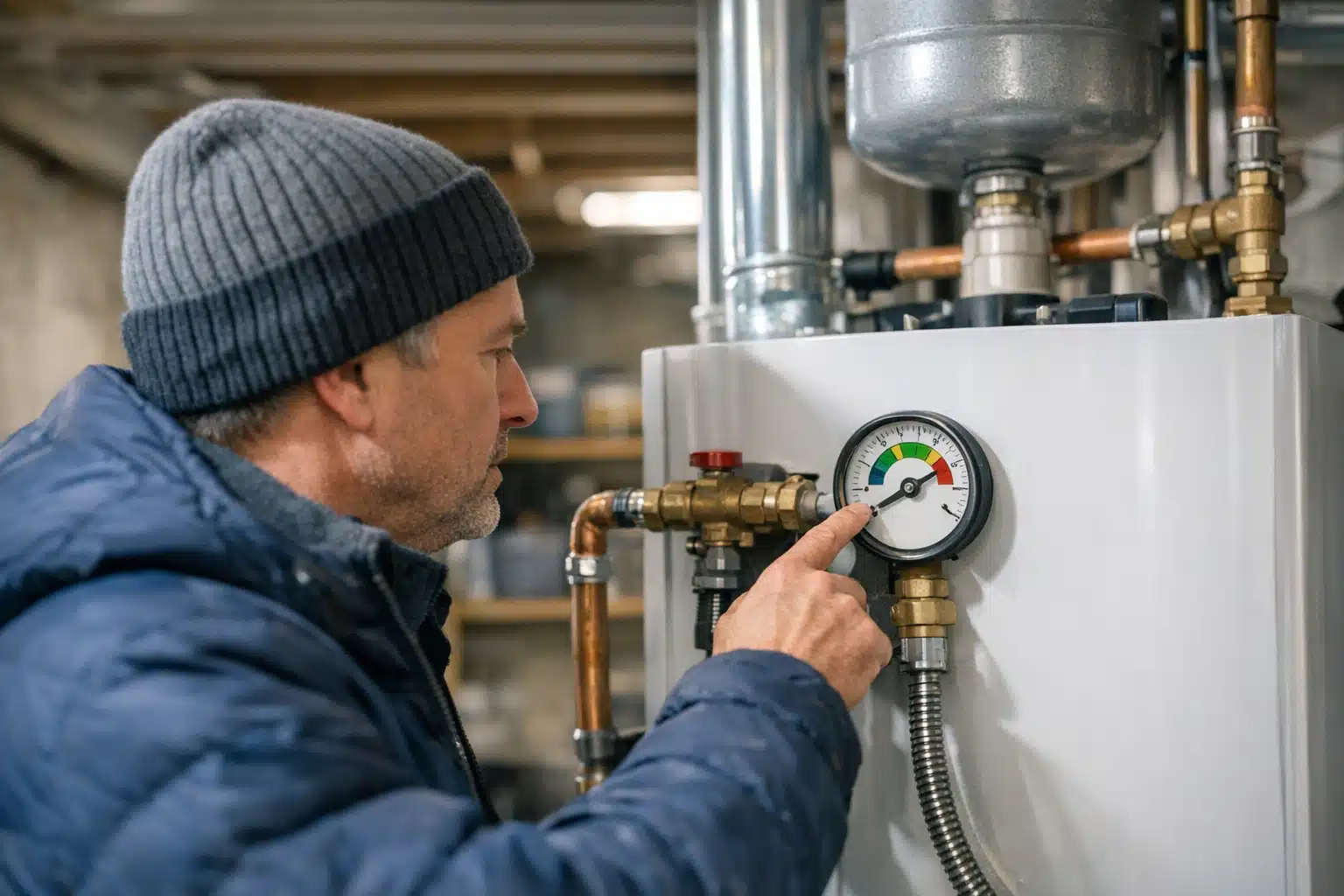
1. Check Boiler Pressure
Most residential boilers run between 1.0 and 1.5 bar when cold. A gauge reading below 0.5 means the system needs topping up. A reading above 2.5 signals a fault worth reporting.
2. Bleed Your Radiators
Cold spots at the top of a radiator mean trapped air. Use a radiator key to release it until water appears. This restores even heat across older Wheat Ridge and Arvada homes with cast-iron units.
3. Watch for Warning Signs
- Yellow pilot flame instead of blue — a possible carbon monoxide risk
- Banging or gurgling noises during startup
- Visible water pooling under the unit
- A boiler that short-cycles on and off repeatedly
- Rising gas bills with no change in usage
4. Keep the Area Clear
Dust, storage boxes, and laundry near the unit block airflow. Combustion air matters in tightly sealed newer Broomfield and Westminster homes. Leave at least two feet of clearance.
What Requires a Licensed Technician
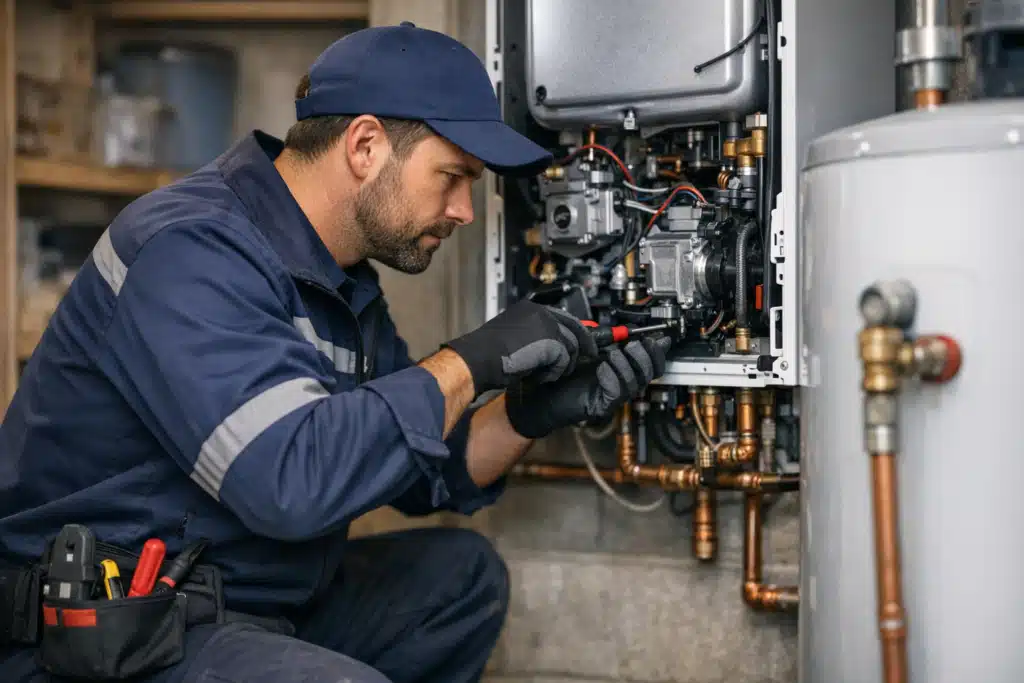
Certain work is illegal or dangerous for untrained hands. Colorado requires licensed plumbers and gas fitters for combustion and gas-line work.
Combustion and Gas Testing
A technician uses a combustion analyzer to measure gas ratios and flue emissions. This catches carbon monoxide leaks before they reach your family. No hardware-store tool replaces this step.
Heat Exchanger Inspection
A cracked heat exchanger leaks carbon monoxide and often means replacement. Only a trained eye spots hairline cracks early. Denver’s freeze-thaw cycles stress these components harder than flat, warmer climates.
Flue and Venting Checks
Blocked or corroded flues send exhaust back indoors. Snow drifts and ice near sidewall vents cause this every winter in Arvada. A technician confirms proper draft and clearance.
Why Denver’s Climate Changes the Equation
Front Range winters run long and swing hard. A 60-degree afternoon can drop to 10 degrees by midnight. That temperature whiplash forces boilers to cycle far more than in steady climates.
Our elevation matters too. At roughly 5,280 feet, thinner air changes combustion behavior. Boilers installed at sea-level settings burn inefficiently here without altitude adjustment.
Altitude and Combustion
Many boilers need de-rating for high-altitude operation. A unit rated at sea level delivers less clean combustion in Denver. A local technician sets the gas-air mixture for our elevation.
Hard Water Buildup
Denver-area water carries heavy mineral content. Scale collects inside heat exchangers and shortens system life. Yearly flushing removes buildup that DIY checks cannot reach.
Cost Breakdown: DIY vs Professional
Money drives many maintenance decisions. Here is how the numbers compare for Front Range homeowners.
- DIY tools (radiator key, pressure gauge): $10–$30 one time
- Annual technician tune-up: $150–$300 in the Denver metro
- Emergency winter repair call: $400–$900 or more
- Heat exchanger replacement: $600–$1,500 in parts and labor
- Full boiler replacement: $4,000–$9,000 depending on unit
A yearly tune-up costs less than one emergency call. Skipping maintenance to save $200 risks a $900 breakdown at 2 a.m. in January.
A Real Front Range Scenario
One Arvada homeowner ignored a slow pressure drop all fall. By December the boiler locked out during a hard freeze. The cause turned out to be a corroded expansion tank and scaled heat exchanger.
A yearly inspection would have caught both for the price of a tune-up. Instead the repair ran over $1,100 with an emergency premium. This pattern repeats across older Denver homes every winter.

 Posted on Google
How Often Should You Schedule Professional Service?
Once per year is the standard for gas boilers. The best window runs from late summer through early fall. Booking then avoids the winter rush when technicians run booked solid.
- Schedule your tune-up in September or October
- Run your own monthly pressure and radiator checks
- Test carbon monoxide detectors at the same time
- Note any odd noises and report them early
Signs You Need a Technician Now, Not Later
Some symptoms cannot wait for a scheduled visit. Call for service right away if you notice any of the following.
- A rotten-egg or sulfur smell near the unit
- Carbon monoxide detector alarms
- Water leaking onto the floor
- No heat during a freeze warning
- A pilot light that will not stay lit
A gas smell means leave the home and call from outside. Front Range winters give no grace period for delay.
The Case for Local Expertise
National chains rotate crews who may never work at altitude. A Denver-based team knows how our elevation and water affect every brand installed here. That local knowledge shortens diagnosis and repair time.
Cardom Plumbing & Heating serves Arvada, Denver, Wheat Ridge, Broomfield, and Westminster. Fast response matters most when temperatures fall below zero. A neighbor-based crew reaches your door quicker than an out-of-area outfit.
Conclusion
Handle basic checks yourself, but leave gas, combustion, and heat-exchanger work to a licensed technician. Denver’s altitude, hard water, and temperature swings make yearly professional care the smarter money choice. A tune-up now beats an emergency call during a January freeze.
Ready to protect your home before winter hits hard? Call or text Cardom Plumbing & Heating at 720‑775‑8322, email tomd@cardomcolorado.com, or visit https://www.cardomcolorado.com to book your boiler tune-up across Arvada and the Front Range.
Sources
- U.S. Consumer Product Safety Commission – Carbon Monoxide Information Center
- U.S. Department of Energy – Home Heating Systems
- U.S. Environmental Protection Agency – Carbon Monoxide’s Impact on Indoor Air Quality


