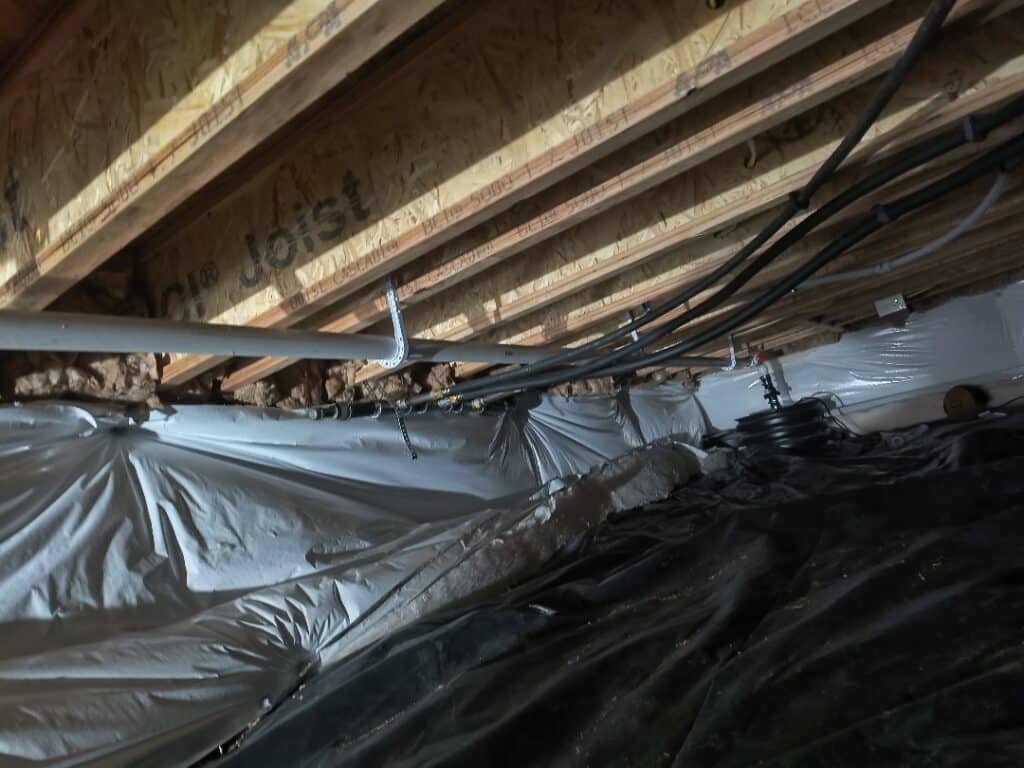
Sump pump systems are essential in Denver due to the area's unique soil and weather conditions, which can lead to groundwater intrusion and flooding. Proper installation and maintenance are crucial to protect homes from moisture damage and costly repairs.
Denver's clay-heavy soil and weather create a persistent risk of flooding in basements and crawl spaces. Sump pumps collect and discharge water away from homes to prevent damage.
Professional diagnosis is important to identify potential sump pump failures before they occur, especially during heavy rain or rapid snowmelt.
Cardom Plumbing & Heating offers tailored sump pump services, ensuring systems are designed for Denver's specific challenges and providing ongoing maintenance to prevent issues.
What is the purpose of a sump pump in Denver?
A sump pump in Denver is designed to prevent flooding and moisture damage in basements or crawl spaces. Given the area's clay-heavy soil and seasonal weather patterns, a sump pump effectively manages groundwater intrusion, protecting your home's foundation and reducing the risk of costly repairs.
Sump Pump Services in Denver, CO
Water pooling in your basement or crawl space signals a problem that won't resolve itself. Denver's unique combination of clay-heavy soil, dramatic spring snowmelt, and intense summer thunderstorms creates conditions where groundwater intrusion becomes a persistent threat to your home's foundation and structural integrity. A properly functioning sump pump serves as your primary defense against flooding, moisture damage, and the costly repairs that follow.
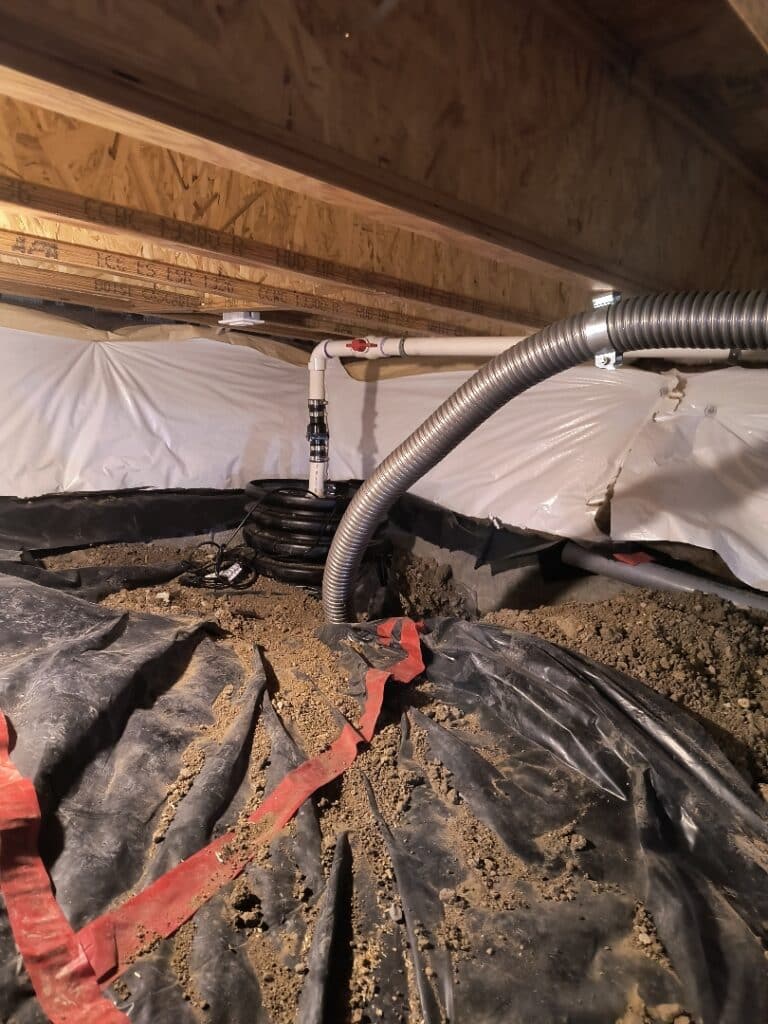
Sump pump systems collect water that accumulates beneath your foundation and discharge it safely away from your home. The system consists of a basin (or pit) installed at the lowest point of your basement or crawl space, a pump unit, discharge pipes, and often a battery backup system. When water levels rise in the basin, the pump activates automatically – removing water before it can damage your property.
Professional diagnosis matters because sump pump failures typically occur at the worst possible moment – during heavy rain or rapid snowmelt when you need protection most. A trained technician can identify issues before they become emergencies:
Motor wear patterns that indicate impending failure
Float switch malfunctions that prevent proper activation
Discharge line obstructions or improper grading
Inadequate pump capacity for your home's water table conditions
Denver presents specific challenges that affect sump pump performance. The semi-arid climate creates soil conditions that swing between extremely dry and saturated. Homes built on the region's expansive clay soils experience significant ground movement, which can shift basin positioning and stress discharge lines. Water quality – including mineral content from mountain runoff – can accelerate pump component wear.
Denver's Front Range location creates a distinctive set of conditions that directly impact sump pump reliability. The city sits at 5,280 feet elevation where freeze-thaw cycles occur more frequently than in lower-altitude regions. These temperature swings – sometimes 40 degrees or more in a single day – stress mechanical components and can freeze discharge lines that aren't properly installed or insulated.
The region's soil composition presents particular challenges. Much of the Denver metro area sits on bentonite clay, which expands dramatically when wet and contracts when dry. This movement exerts pressure on foundation walls and can shift sump basins out of level, causing float switches to malfunction. Homes in neighborhoods like Green Valley Ranch, Stapleton, and areas near Cherry Creek experience especially high water table conditions during wet seasons.
Seasonal Timing Factors
Spring snowmelt season – typically March through May – creates the highest demand on sump pump systems. Rapid warming can release months of accumulated snowpack within days. Summer monsoon season brings intense afternoon thunderstorms that overwhelm drainage systems. Winter brings the risk of frozen discharge lines and power outages during storms.
Clay soil saturation – Denver's expansive soils hold water near foundations longer than sandy soils, extending pump run times
High water table areas – Neighborhoods near the South Platte River, Clear Creek, and Cherry Creek experience elevated groundwater
Aging infrastructure – Many Denver homes built in the 1950s-1970s have original sump systems that lack modern safety features
Power grid vulnerability – Summer storms and winter blizzards cause outages precisely when pumps need to operate
Mineral-heavy water – Hard water from mountain sources deposits scale on pump components, reducing efficiency
Discharge line freezing – Lines that exit above the frost line (approximately 36 inches in Denver) are vulnerable to ice blockages
Warning Signs Requiring Attention
Recognizing early indicators prevents catastrophic failures:
Pump runs continuously or cycles on and off rapidly
Unusual grinding, rattling, or humming sounds during operation
Visible rust or corrosion on pump housing
Musty odors in basement or crawl space despite pump operation
Water stains on basement walls or floor near the sump basin
Pump fails to activate when water is poured into the basin
Recent Work
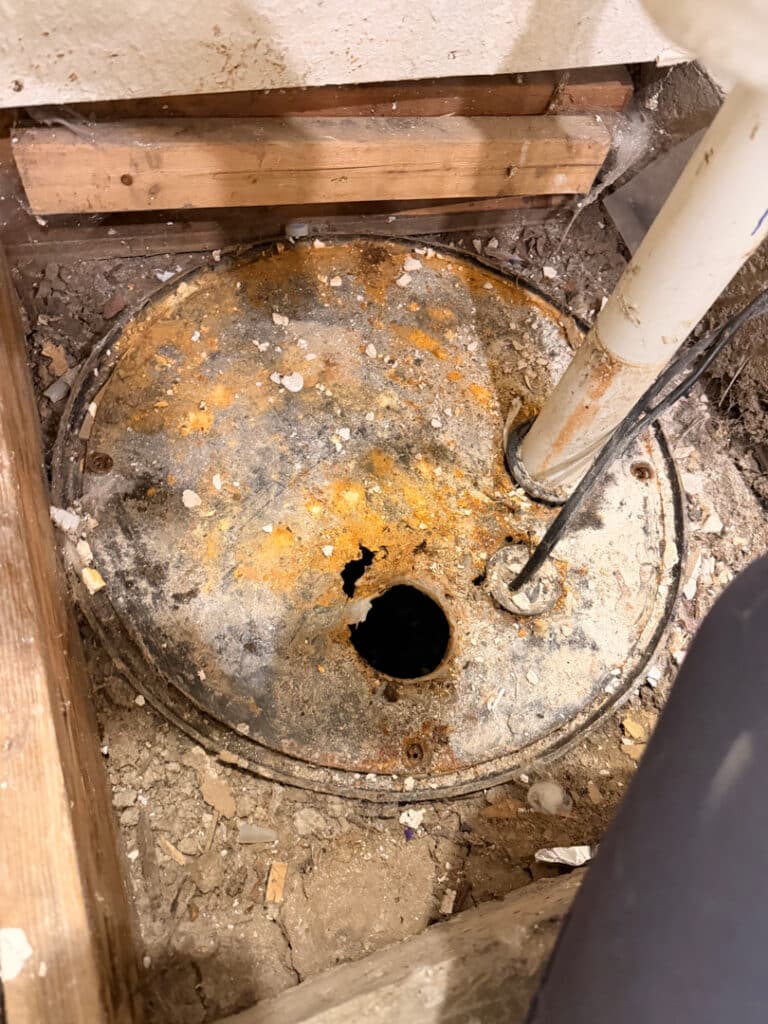
Lid to Sump Pump is Rotted Out. - Denver
Problem:Lid on sewage ejector.
Found:Checked isolation ball valve on the sewage discharge line. Since it is rarely used, it was stuck. Took measurements on the rotted lid.
Fixed:We freed it up and exercised it a few times. Working properly at this time. Went out and pickep a new lid and seal for the lid. Returned and reinstalled with discharge and vent line were reconnected.
Outcome:Tested pump and it is working properly with no leaks.
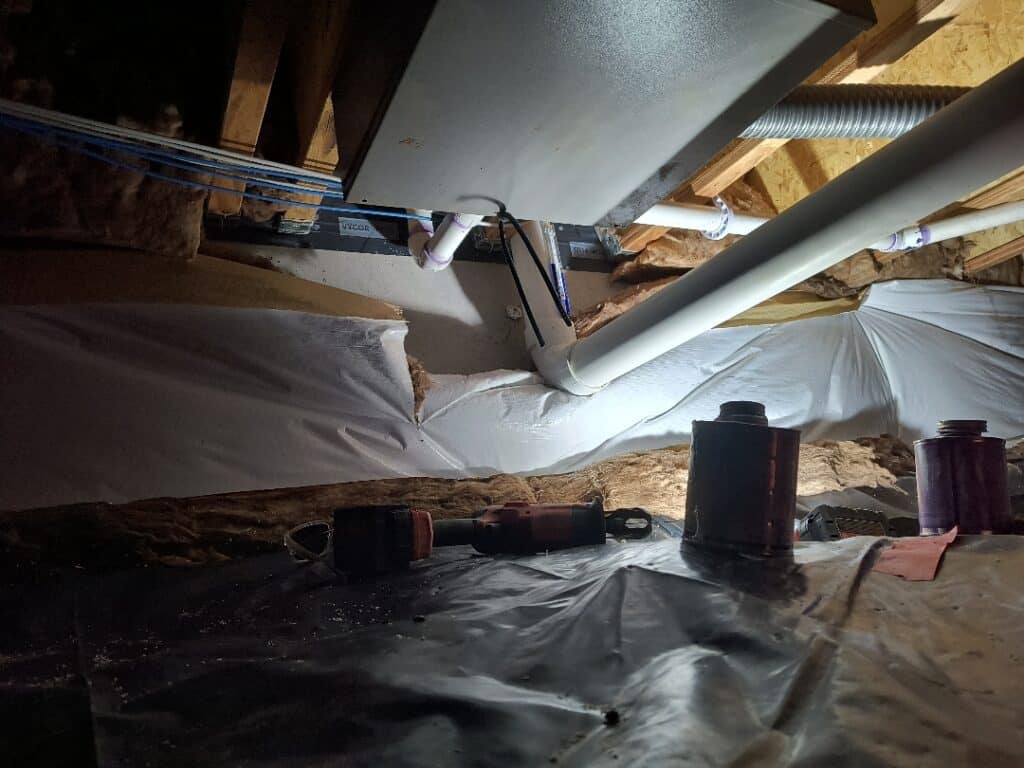
Connect Sump Pump Discharge to Downspout Drain - Denver
Problem:ach unit had a sump pump previously installed by another company which discharged into sewer, against code.
Found:Each of these units' sump lines were cut, the sewer lines were capped, and sump lines were ran through penetrations exiting each unit into their respective storm drainage.
Fixed:Each pump was tested and found to be functional and new lines were installed up to code. A ball valve was installed after each check valve on each line.
Outcome:No leaks were found after testing on work that was completed.
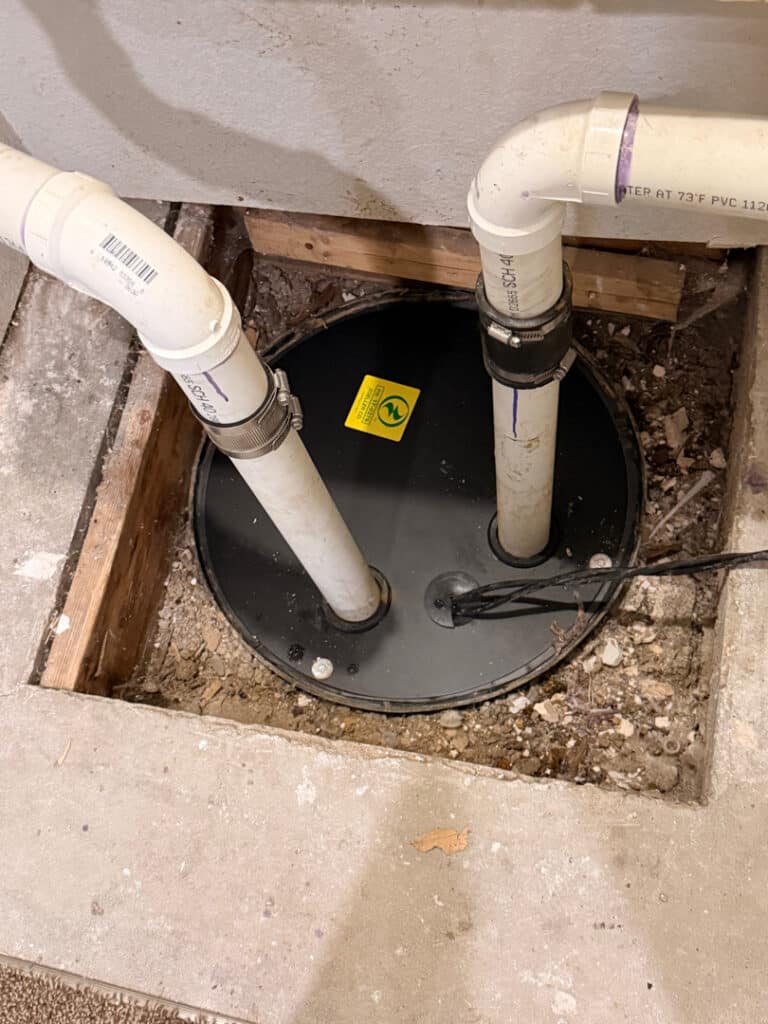
Install Sump Pump in Basement Floor - Denver
Problem:Installation of the new sump pump system.
Found:New sump pump.
Fixed:Drained the zone, cut the copper line and rerouted it around the pit with copper ProPress fittings and pipe. Taped all copper fittings. Filled up the system and tested the zone.
Outcome:Working properly
Sump Issue - Denver
Problem:Sump pump was not working
Found:Found a piece of debris lodged in the float
Fixed:Cleaned pump out and tested operation
Outcome:Everything is working good, also tested outlets for correct power, electrical on site confirmed outlets are fine.
Remove Broken Sump Pump - Denver
Problem:Sump pump replaced
Found:Old sump pump .
Fixed:Pulled deep sump pump out that had burned up in the flood. Replaced and repiped with new check valve, ball valve, pipe and fittings.
Our approach to sump pump service combines systematic diagnostics with solutions tailored to Denver's specific conditions. We've developed protocols that address the unique challenges of Front Range homes – from high-altitude freeze concerns to clay soil water management.
Our Service Process
Initial assessment – We evaluate your current system, inspect the basin depth and positioning, check float switch operation, and test pump discharge capacity
Site condition analysis – We examine your property's drainage patterns, foundation type, and proximity to known high water table areas
System testing – We run the pump through multiple cycles, measure flow rates, check electrical connections, and verify backup system functionality
Problem identification – We document specific issues with photos and explain findings in plain language
Solution recommendation – We present repair or replacement options appropriate for your home's needs and budget
Implementation – We complete approved work with attention to proper basin depth, discharge line routing, and freeze protection
Verification testing – We confirm proper operation before leaving and demonstrate system function to you
Techniques and Methods
Our technicians employ multiple diagnostic and installation approaches:
Water table monitoring to determine appropriate pump capacity
Discharge line inspection for obstructions, improper slope, or freeze damage
Electrical system evaluation including dedicated circuit assessment
Battery backup testing under simulated power outage conditions
Check valve inspection to prevent backflow into the basin
Basin debris removal and cleaning
Quality Control and Communication
Every installation includes post-completion testing where we simulate high-water conditions to verify proper pump activation and discharge. We document system specifications for your records and provide maintenance guidance specific to Denver's seasonal demands. Our team follows up after major weather events to ensure systems performed as expected.
We keep you informed throughout the process – explaining what we find, why it matters, and what options make sense for your situation. No technical jargon without explanation, no pressure to approve unnecessary work.
Why Choose Cardom Plumbing & Heating
Cardom Plumbing & Heating brings licensed, insured technicians with specific training in sump pump systems and Denver's unique plumbing challenges. Our team holds certifications from major pump manufacturers and stays current on evolving installation standards. We understand the difference between a pump that technically works and a system properly designed for Front Range conditions.
Local knowledge shapes our recommendations. We know which Denver neighborhoods sit on high water tables, which soil types cause the most foundation stress, and which installation methods perform best at altitude. This experience means fewer callbacks and longer-lasting solutions. We've served the Denver metro area long enough to understand that a sump pump installation in Highlands Ranch faces different challenges than one in Arvada or Aurora.
Our Commitment to You
Responsive scheduling – We prioritize emergency calls during storm events when pump failures cause immediate damage
Transparent assessments – We show you exactly what we find and explain repair versus replacement considerations honestly
Quality components – We install pumps rated for continuous duty with appropriate horsepower for your water conditions
Proper installation – We address discharge line routing, freeze protection, and electrical requirements – not just the pump itself
Follow-up service – We offer maintenance programs that catch problems before they cause flooding
Our technicians carry diagnostic equipment that identifies issues invisible to visual inspection – including amp draw testing that reveals motor wear before failure occurs. We use video inspection when discharge line problems are suspected and can pinpoint obstructions without excavation in many cases.
Denver's housing stock spans more than a century of construction methods, each era presenting distinct sump pump considerations. Understanding your home's age and construction type helps determine the most effective water management approach.
Historic and Mid-Century Homes
Homes built before 1960 – common in neighborhoods like Park Hill, Congress Park, and Washington Park – often feature:
Stone or block foundations more susceptible to water infiltration
Original drainage systems that may have deteriorated or never included sump pumps
Shallow basements or partial cellars with limited headroom for equipment
Older electrical systems requiring upgrades to support modern pump demands
These properties frequently need sump pump retrofits rather than replacements. Installation may require cutting through concrete floors and routing new discharge lines through finished spaces.
1970s-1990s Construction
Homes from this era – prevalent in suburbs like Lakewood, Littleton, and Thornton – typically include:
Poured concrete foundations with perimeter drain tile systems
Original sump pumps that have exceeded their 10-15 year expected lifespan
Finished basements where pump failure causes significant damage to living space
Plastic discharge lines that may have cracked or separated at joints
Modern Construction
Newer developments often include builder-grade sump systems that meet minimum code requirements but may lack capacity for Denver's intense storm events. Common upgrades include higher-horsepower primary pumps, battery backup systems, and water alarm sensors. Homes in newer communities like Green Valley Ranch or Reunion may have been built on land with historically high water tables that require robust pumping capacity.
Denver's environmental factors create a demanding operating environment for sump pump systems. Understanding these conditions helps explain why proper installation and maintenance matter more here than in many other regions.
Water Quality Characteristics
Denver Water supplies most of the metro area with water sourced from mountain snowmelt – relatively soft compared to groundwater but still containing minerals that affect pump longevity:
Moderate hardness levels (50-100 mg/L) that cause gradual scale buildup on pump components
Sediment from spring runoff that can clog intake screens
Iron and manganese traces that contribute to rust formation
Groundwater entering sump basins often has higher mineral content than municipal supply, accelerating wear on pump seals and impellers.
Soil and Drainage Effects
The Denver Basin's geology creates challenging drainage conditions:
Bentonite clay expands up to 15% when saturated, exerting lateral pressure on foundations
Caliche layers (calcium carbite deposits) create impermeable barriers that trap water near foundations
Sandy areas near the South Platte allow rapid water movement but provide less foundation support
Varying soil conditions across a single property can create unpredictable water accumulation patterns
Climate Impacts
Denver averages 57 inches of snow annually, with most accumulation between November and April. Spring melt combined with rain events creates peak sump pump demand. The city experiences approximately 300 days of sunshine annually – meaning rapid evaporation during dry periods followed by intense saturation during storms. This cycle stresses pump components through irregular operation patterns.
Summer monsoon season – typically July through September – brings afternoon thunderstorms that can drop 1-2 inches of rain within an hour. Storm drains overflow, and groundwater levels spike rapidly. Pumps must handle sudden high-volume demands rather than steady moderate flow.
Denver Flood Risk and Drainage Data
Denver's flood history directly impacts sump pump requirements throughout the metro area. The city sits at the confluence of the South Platte River, Cherry Creek, and numerous smaller drainages – creating flood vulnerability that has shaped both infrastructure investment and building codes.
FEMA flood maps identify significant portions of Denver within 100-year and 500-year flood zones. Neighborhoods along the South Platte corridor – including Globeville, Elyria-Swansea, and portions of RiNo – face elevated flood risk. Cherry Creek's path through central Denver places areas of Congress Park, Glendale, and Cherry Creek North in flood-prone zones. Even homes outside mapped flood zones experience basement flooding from localized drainage issues and high water tables.
Key Flood and Drainage Statistics
Denver has experienced over 100 significant flood events since 1864, with major events in 1965, 1973, and 2013
The Urban Drainage and Flood Control District manages over 2,800 miles of major drainageways across the metro
Approximately 15% of Denver properties lie within designated flood hazard areas
Flash flood warnings average 15-20 per year during monsoon season
Groundwater levels in portions of northeast Denver have risen 10-15 feet since the 1990s due to reduced agricultural pumping
These conditions make sump pump systems more than a convenience – they're a necessity for protecting property in much of the Denver metro. Homes without adequate pumping capacity face repeated water intrusion during seasonal high-water periods. Properties near detention ponds, in low-lying areas, or downstream from impervious commercial development experience elevated water table conditions that demand reliable sump pump operation.
Insurance data reinforces the importance of water management systems. Flood damage claims in Colorado have increased steadily, with basement flooding representing a significant portion of homeowner claims. Many policies require functioning sump systems for coverage, and proper installation documentation can affect both eligibility and premiums.
A sump pump is a device installed in the lowest part of your basement or crawl space to collect and remove excess water. It works by pumping water out of a basin when the water level rises, preventing flooding and moisture damage to your home.
In Denver, the combination of clay-heavy soil, spring snowmelt, and summer thunderstorms increases the risk of groundwater intrusion. A sump pump is essential for protecting your home’s foundation from water damage and costly repairs.
It's recommended to have your sump pump inspected at least once a year, especially before the rainy season or snowmelt. Regular inspections can help identify potential issues before they lead to pump failure.
Common issues include float switch malfunctions, motor wear, and discharge line obstructions. The unique soil and climate conditions in Denver can also lead to problems like freezing discharge lines or shifting basins.
You can test your sump pump by pouring water into the basin to see if it activates and removes the water. Additionally, listen for any unusual noises and check for any signs of leaks or blockages in the discharge line.
If your sump pump fails, immediately check for power supply issues or blockages. If you cannot resolve the problem, contact a professional to assess and repair the pump to prevent water damage.
While some homeowners may attempt to install a sump pump themselves, it's often best to hire a professional. Proper installation is crucial for effective operation, especially in Denver's challenging soil and climate conditions.