Sewer cleanout services in Louisville, CO address blocked sewer lines that can lead to serious issues like sewage backup. They provide direct access to the main sewer line for clearing blockages and inspecting the system.
A sewer cleanout allows for effective blockage removal and camera inspections to identify underlying issues.
Louisville's unique soil and climate conditions can complicate sewer systems, making professional service essential.
Cardom Plumbing & Heating offers same-day emergency responses and thorough follow-up to ensure proper system function.
What is a sewer cleanout?
A sewer cleanout is an access point in a plumbing system that allows for easy cleaning and maintenance of sewer lines. It helps to clear blockages and enables plumbers to inspect the sewer system, ensuring proper flow and preventing sewage backups in homes.
Sewer Cleanout Services in Louisville, CO
That unmistakable sewage odor drifting up from your drains isn't something you can ignore. Neither is the slow gurgling in multiple fixtures or water backing up in your basement floor drain. These symptoms point to a blocked sewer line – a problem that demands immediate attention before wastewater finds its way into your Louisville home.
A sewer cleanout is a direct access point into your main sewer line, typically a capped pipe located near your foundation or in your yard. Professional sewer cleanout service involves opening this access point to clear blockages, inspect the line with camera equipment, and restore proper flow from your home to the municipal sewer system. This procedure addresses the root cause of drainage failures rather than treating individual fixture symptoms.
Professional diagnosis matters because sewer problems rarely have simple causes. What appears to be a basic clog might actually involve tree root infiltration, pipe bellying from soil settlement, or deteriorating cast iron lines common in Louisville's older neighborhoods. Without proper camera inspection through the cleanout, you're essentially guessing – and guessing often leads to repeated service calls and escalating damage.
Louisville's unique combination of clay-heavy soils, dramatic temperature swings, and aging infrastructure creates specific challenges for residential sewer systems. Homes built during the town's growth periods in the 1970s through 1990s may have original clay tile or early PVC connections that have shifted over decades.
Key Benefits of Professional Sewer Cleanout Service
Direct access to blockages that snaking from fixtures cannot reach
Camera inspection capability to identify the exact cause and location of problems
Prevention of sewage backup into living spaces and finished basements
Documentation of pipe condition for future maintenance planning
Cardom Plumbing & Heating provides Sewer Cleanout services in all neighborhoods of Louisville including Balfour, Centennial Heights, Cherrywood II, Eagle Place, Paragon Estates, Parco Dello Zingaro, Steel Ranch Subdivision, and Waneka Landing.
Louisville sits at approximately 5,300 feet elevation along the Front Range, where soil conditions and climate create a demanding environment for underground sewer lines. The predominant clay soils in this area expand significantly when wet and contract during dry periods, placing constant stress on buried pipes and their joints.
Many Louisville neighborhoods feature mature landscaping with established root systems. Cottonwoods, willows, and even ornamental trees send roots seeking moisture – and your sewer line provides exactly what they're looking for. Root infiltration through pipe joints represents one of the most common causes of sewer blockages in this community, particularly in lines installed before the 1990s.
Local Factors Affecting Sewer Systems
Clay soil expansion and contraction causing pipe joint separation
Freeze-thaw cycles that shift soil and stress underground connections
Mature tree root systems infiltrating older pipe materials
Original cast iron or clay tile pipes in pre-1980 construction reaching end of service life
High water table areas near Coal Creek experiencing groundwater infiltration
Settling foundation conditions in homes built on former mining areas
Seasonal Considerations
Winter brings particular challenges when frozen ground prevents proper drainage and ice formation can occur in shallow sewer lines. Spring snowmelt often reveals problems that developed over winter, as increased water flow exposes weakened joints and partial blockages. Summer's dry conditions cause soil shrinkage that can shift pipe alignment, while fall brings heavy leaf debris and the final push of root growth before dormancy.
Warning Signs Requiring Immediate Attention
Multiple drains backing up simultaneously
Gurgling sounds from toilets when using other fixtures
Sewage odors from floor drains or yard areas
Wet spots or unusually green patches in your lawn
Water backing up in basement floor drains during heavy rain
Our approach to sewer cleanout service follows a systematic diagnostic process. Rather than simply clearing the immediate blockage, we identify why the problem occurred and what condition your sewer line is in overall.
Our Step-by-Step Process
Initial Assessment – We evaluate your symptoms, check multiple fixtures, and locate your cleanout access points
Cleanout Access – We open the cleanout cap and assess the immediate situation, noting water levels and visible obstructions
Camera Inspection – We insert a high-resolution sewer camera to travel the length of your line, documenting conditions in real-time
Blockage Clearing – Using the appropriate method for your specific situation, we restore flow through the line
Verification Inspection – We re-camera the line to confirm complete clearing and document any remaining concerns
Condition Report – We provide findings and recommendations based on what the camera revealed
Clearing Methods and Techniques
Mechanical cable cleaning – Heavy-duty rotating cables that cut through roots and break up solid blockages
Hydro jetting – High-pressure water that scours pipe walls and flushes debris completely out of the system
Root cutting – Specialized cutting heads designed to remove root masses without damaging pipe walls
Descaling – Removal of mineral buildup and corrosion in older cast iron lines
Quality Control and Communication
Every sewer cleanout includes before and after camera footage. You see exactly what we see – the blockage, the clearing process, and the final condition of your line. We explain what we find in straightforward terms and discuss options when repairs or replacement might be necessary.
Our technicians document cleanout locations, note any access issues for future service, and flag potential problems before they become emergencies. This information becomes part of your service history, making future maintenance more efficient.
Recent Work
Water Leaking - Louisville
Problem:Find and repair leak.
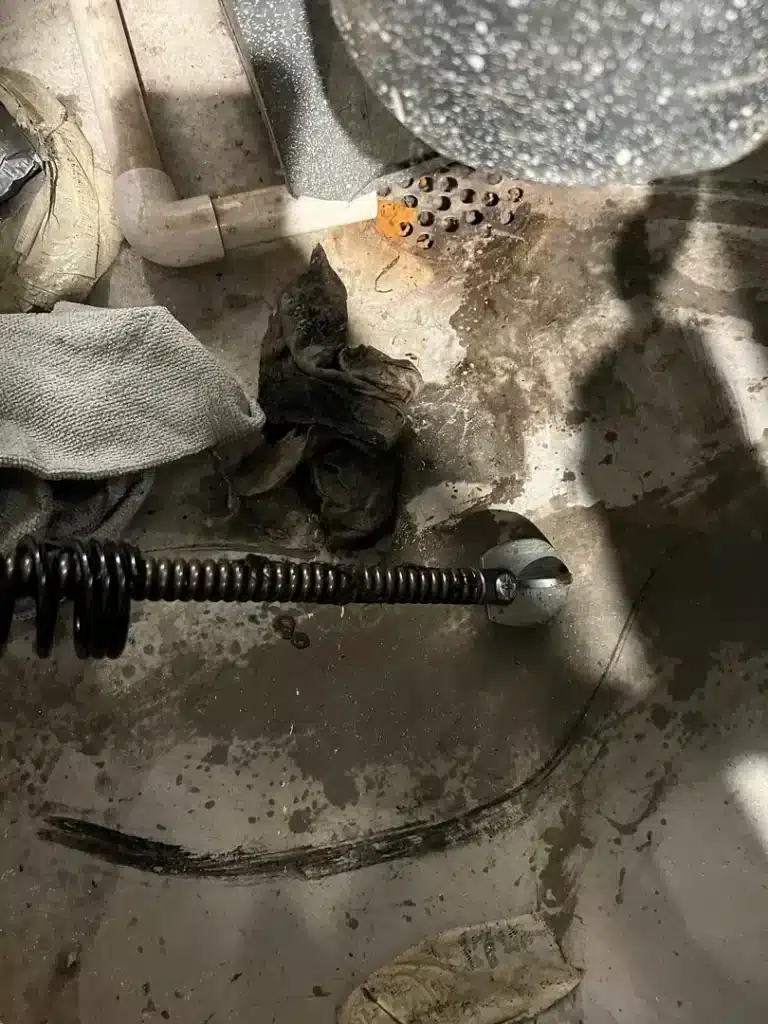
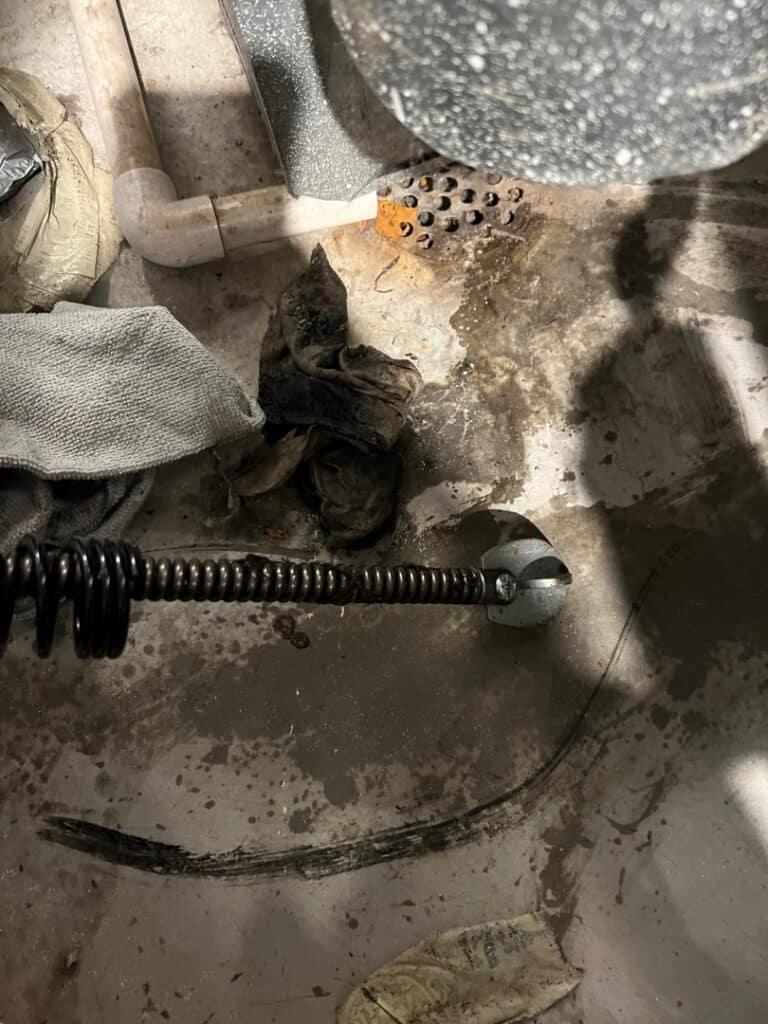
Found:Pulled out some wipes that were flushed down.
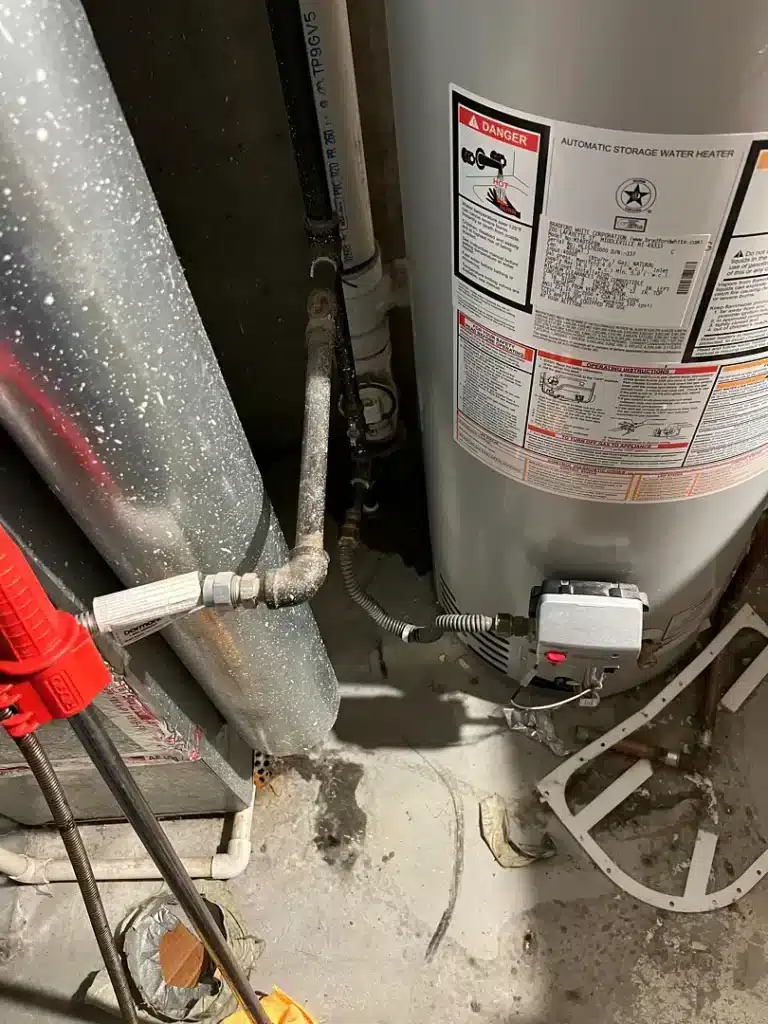
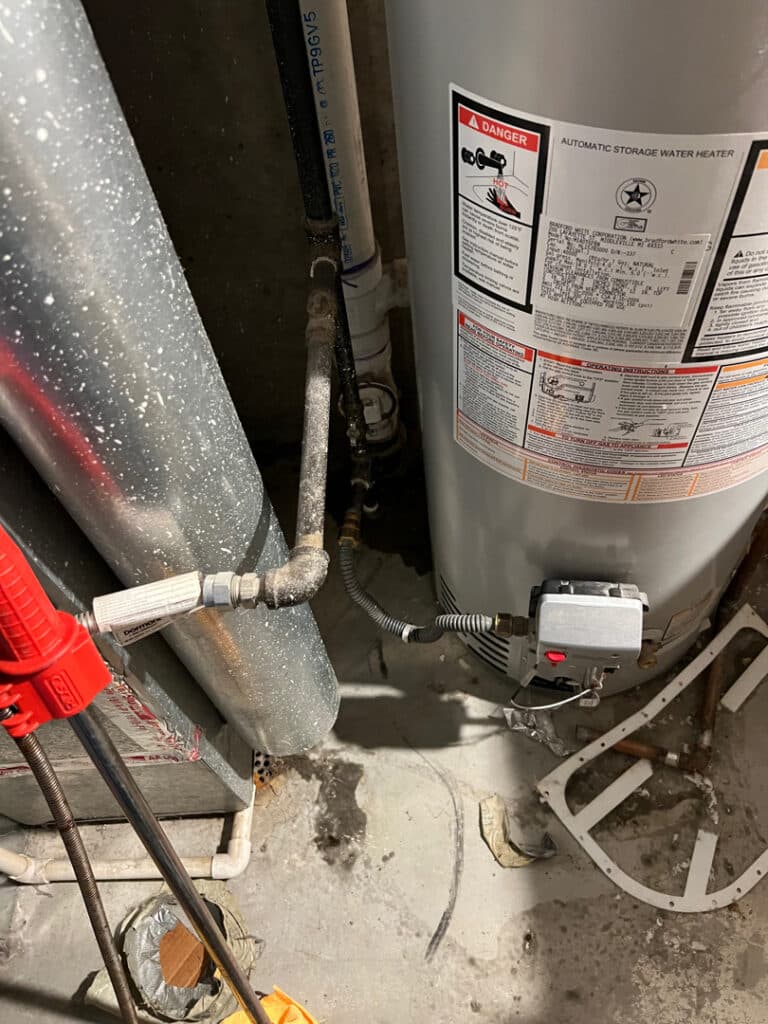
Fixed:Using large sewer machine, we ran the cable from the house to the main several times. Ran all plumbing in the home at the same time. Cleared drain. There was also a lot of grease in the line so we feel the wipes stuck to the grease and caused the blockage.
Outcome:Working properly
Water Leaking - Louisville
Problem:The water leak was a stopped up sewer main.
Found:Using large sewer machine, we ran the cable from the house to the main several times. Pulled out some wipes that were flushed down.
Fixed:Ran all plumbing in the home at the same time. Cleared drain.
Outcome:There was also a lot of grease in the line so we feel the wipes stuck to the grease and caused the blockage. Jobsite cleanup.
Why Choose Cardom Plumbing & Heating
Cardom Plumbing & Heating brings licensed, insured technicians to every sewer service call. Our team holds current Colorado plumbing licenses and maintains ongoing training in the latest diagnostic and clearing technologies. We carry comprehensive liability coverage – not just the minimum required – because sewer work involves your property and your neighbors' properties.
Our service vehicles stock the equipment needed for most sewer situations, including multiple cable sizes, camera systems, and jetting capabilities. This means fewer return trips and faster resolution. When we schedule your appointment, we provide a realistic arrival window and call ahead when we're on our way.
What Sets Us Apart
Same-day emergency response for active sewage backups
Camera inspection included with cleanout services – not an expensive add-on
Clear, written estimates before any work beyond the initial assessment
Follow-up contact to confirm your system is functioning properly
Maintenance recommendations based on your specific pipe conditions and local factors
We've served the Louisville community long enough to understand its plumbing quirks – from the original subdivisions near downtown to the newer developments toward Superior. Our familiarity with local building practices, common pipe materials by neighborhood, and typical problem patterns means faster diagnosis and more accurate solutions.
Louisville's housing stock reflects distinct development periods, each with characteristic plumbing materials and configurations that affect sewer service needs.
Historic Core and Pre-1970 Construction
The original Louisville townsite and surrounding blocks contain homes dating from the late 1800s through the mid-20th century. These properties often feature:
Clay tile or Orangeburg (fiber) sewer lines prone to collapse and root infiltration
Cleanouts located in basements or crawl spaces rather than exterior access points
Shared or combined sewer connections in some blocks
Shallower burial depths making lines susceptible to freeze damage
1970s-1990s Subdivisions
Louisville's major growth period brought developments like Centennial, Coal Creek, and adjacent neighborhoods. These homes typically have:
Early PVC or ABS plastic sewer lines with solvent-welded joints
Cast iron interior drain lines transitioning to plastic at the foundation
Standard 4-inch cleanout access near the foundation or at property line
Longer runs to municipal connections as subdivisions extended outward
2000s and Newer Construction
Recent developments feature modern materials and code requirements, including dual cleanouts – one near the structure and one at the property line. These systems generally require less frequent service but still face root infiltration and soil movement issues common throughout Louisville.
Basement Considerations
Many Louisville homes include finished basements with additional bathroom fixtures. These below-grade systems rely on proper main line flow – when the sewer backs up, basement fixtures are the first affected and often suffer the worst damage. Regular cleanout service protects these valuable living spaces.
Louisville receives water from the City of Louisville's municipal system, which sources primarily from surface water. The water is moderately hard, containing dissolved minerals that can contribute to buildup inside drain lines over time. While hardness primarily affects supply-side plumbing, mineral deposits can accumulate at drain line junctions and reduce effective pipe diameter.
Soil and Drainage Effects
The predominant soil types in Louisville include clay and clay-loam compositions that create specific challenges for buried sewer infrastructure:
Expansive clay – Swells when wet, exerting lateral pressure on pipe walls and joints
Shrinkage during drought – Creates voids around pipes that allow settling and misalignment
Poor drainage – Holds water near pipe exteriors, accelerating joint deterioration
Corrosive potential – Certain clay compositions can accelerate degradation of older pipe materials
Properties near Coal Creek and its tributaries may experience higher groundwater levels, particularly during spring runoff. This groundwater can infiltrate damaged sewer lines, adding volume to the system and sometimes carrying sediment that contributes to blockages.
Climate Impacts on Sewer Systems
Louisville's semi-arid climate with cold winters creates thermal stress on underground pipes. Frost depth typically reaches 30-36 inches in this area, and sewer lines buried at minimum code depths can experience freeze-related issues. The dramatic temperature swings common along the Front Range – sometimes 40 degrees or more within 24 hours – cause expansion and contraction cycles that stress pipe joints over time.
Summer afternoon thunderstorms can overwhelm drainage systems, and homes with improper grading or foundation drainage may see stormwater entering the sewer system through damaged cleanout caps or compromised pipe joints. This sudden volume increase often reveals partial blockages that weren't causing symptoms under normal flow conditions.
Louisville Sewer Infrastructure and Municipal System Data
Louisville operates a separated sanitary sewer system – meaning stormwater and wastewater flow through distinct networks. The sanitary sewer system serves approximately 8,500 residential and commercial connections throughout the city's 9.5 square miles. The city's wastewater flows to the South Boulder Creek Wastewater Treatment Facility, which processes an average of 2.5 million gallons daily.
The municipal sewer infrastructure includes lines installed across several decades, with some segments in the historic downtown area dating to the 1950s and 1960s. The city has undertaken ongoing rehabilitation projects to address aging mains, but the connection from your property to the municipal line – the sewer lateral – remains the homeowner's responsibility.
Key Infrastructure Facts
Average sewer lateral length in Louisville ranges from 40-100 feet depending on lot configuration
Most residential connections use 4-inch diameter pipe transitioning to 6-inch municipal mains
The city requires cleanout access within 5 feet of the building for new construction and major renovations
Some older properties lack exterior cleanout access, requiring installation during service
Louisville's relatively flat terrain means sewer lines rely on minimal grade for flow – making complete clearing critical
How This Affects Your Service Needs
The combination of aging private laterals connecting to maintained municipal mains means the weakest point in the system is often the homeowner's responsibility. Root infiltration, joint separation, and pipe deterioration typically occur in the lateral rather than the main. Regular cleanout service with camera inspection helps identify developing problems while they're still manageable – before a complete blockage sends sewage into your basement or requires emergency excavation.
Louisville's building department maintains records of sewer connection locations and can provide information about your property's connection point. This documentation proves valuable when locating cleanouts that may have been buried by landscaping or covered during construction projects over the years.
A sewer cleanout is a designated access point to your main sewer line, typically a capped pipe located near your home’s foundation or in the yard. It allows for easy access to clear blockages and inspect the sewer line.
A sewer cleanout is essential for addressing blockages in your sewer line. If you notice sewage odors, gurgling sounds from drains, or water backing up, a cleanout provides direct access to resolve these issues before they escalate.
It's advisable to have your sewer cleanout inspected and serviced regularly, especially if you experience frequent clogs or backups. Annual inspections can help identify potential problems before they become serious.
Signs that your sewer cleanout may need attention include unpleasant sewage odors, slow draining fixtures, gurgling sounds, or water backing up in your basement. These symptoms indicate a potential blockage that requires immediate action.
While some minor clogs can be cleared with a plunger or a drain snake, more serious blockages often require professional help. Attempting to clear a blockage without proper tools or knowledge can lead to further damage.
In Louisville, common causes of sewer line blockages include tree root infiltration, shifting pipes due to soil settlement, and deteriorating pipes, especially in older neighborhoods. The area's clay-heavy soils can also contribute to these issues.
A professional sewer cleanout service involves accessing the cleanout, using specialized equipment to clear blockages, and often performing a camera inspection to identify the root cause of the problem. This thorough approach helps prevent future issues.