Gas piping services in Highlands Ranch, CO are essential for maintaining the safety and efficiency of home heating systems. They include installation, repair, inspection, and maintenance of gas lines that power various appliances.
Professional evaluation is critical for safety, especially when detecting gas leaks or system issues.
Services ensure compliance with local building codes and enhance system reliability.
The unique environmental conditions in Highlands Ranch require specialized knowledge for effective gas piping solutions.
What is the importance of gas piping services in Highlands Ranch, CO?
Gas piping services are essential for maintaining the safety and efficiency of your home’s heating system. They ensure that furnaces, water heaters, fireplaces, and cooking appliances operate correctly. Any issues with gas piping can pose safety risks, making professional evaluation crucial for Colorado families relying on these systems year-round.
Gas Piping Services in Highlands Ranch, CO
That faint smell near your water heater or the pilot light that refuses to stay lit – these moments demand immediate attention. Gas piping forms the backbone of your home's heating system, powering furnaces, water heaters, fireplaces, and cooking appliances that Colorado families depend on year-round. When something feels off with your gas system, professional evaluation isn't optional – it's a safety imperative.
Gas piping services encompass installation, repair, inspection, and maintenance of the lines that deliver natural gas throughout your property. This specialized work requires precise pressure testing, leak detection, proper material selection, and code-compliant connections that protect your household from carbon monoxide exposure and combustion risks.
Safety assurance – Professional gas work eliminates dangerous leaks and improper connections
System efficiency – Properly sized and installed lines deliver optimal fuel flow to appliances
Code compliance – Licensed work meets Highlands Ranch building requirements and passes inspection
Highlands Ranch presents unique considerations for gas piping work. The community's elevation of 5,920 feet affects combustion efficiency and appliance calibration. Soil conditions in Douglas County can stress underground lines, while temperature swings from summer highs to winter lows create expansion and contraction cycles that test pipe joints and connections throughout the year.
Highlands Ranch homes – predominantly built between the late 1980s and early 2000s – share common gas piping characteristics that influence maintenance needs. Many properties feature corrugated stainless steel tubing (CSST) alongside traditional black iron pipe, each with distinct vulnerability profiles. The region's clay-heavy soils expand and contract dramatically with moisture changes, placing stress on underground gas lines and foundation penetrations.
Seasonal temperature extremes compound these challenges. Winter nights regularly plunge below zero, while summer afternoons exceed 90 degrees. This 100-plus degree annual temperature range causes metal pipes to expand and contract repeatedly, gradually loosening threaded connections and stressing flexible line fittings. Properties with exterior gas meters face additional exposure to these thermal cycles.
Warning Signs Requiring Professional Evaluation
Recognizing gas system problems early prevents dangerous situations from developing. Watch for these indicators:
Sulfur or rotten egg odor – The distinctive mercaptan additive signals a potential leak
Hissing sounds – Audible gas escaping from pipes, connections, or appliance fittings
Dead vegetation patches – Unexplained brown spots in lawns above buried gas lines
Pilot light problems – Repeated outages or yellow/orange flames instead of blue
Higher utility bills – Unexplained increases may indicate gas escaping before reaching appliances
Physical symptoms – Headaches, nausea, or dizziness near gas appliances suggest incomplete combustion
Highlands Ranch's rapid development period means many homes share similar construction timelines – and similar aging patterns. Properties approaching 25-30 years old often experience simultaneous degradation of original gas fittings, shut-off valves, and appliance connectors. Proactive inspection during this window catches deterioration before failures occur.
Our gas piping services follow a systematic approach that prioritizes safety while delivering lasting solutions. Every project begins with thorough evaluation and concludes with verified system integrity.
Our Gas Service Process
Initial safety assessment – We check for immediate hazards, verify proper ventilation, and assess overall system condition before beginning detailed work
Comprehensive leak detection – Using electronic gas detectors and pressure testing equipment, we identify existing and potential leak points throughout the system
System mapping – We trace gas line routing, document pipe materials and sizes, and identify all connection points and shut-off locations
Repair or installation execution – Licensed technicians complete necessary work using code-approved materials and techniques
Pressure testing verification – We perform required pressure tests to confirm system integrity before restoring service
Final inspection coordination – When permits are required, we schedule and facilitate municipal inspections
Techniques and Methods
Different situations call for specific approaches. Our technicians select appropriate methods based on your system's characteristics:
Electronic leak detection – Combustible gas detectors pinpoint leaks invisible to other methods
Pressure decay testing – Isolating system sections reveals slow leaks that escape immediate detection
Threaded pipe installation – Traditional black iron pipe with properly sealed joints for main distribution lines
CSST installation – Flexible tubing with proper bonding for code-compliant branch line runs
Appliance connector replacement – Modern flexible connectors with excess flow valves for individual appliances
Communication remains constant throughout every project. We explain findings in plain language, discuss options before proceeding, and provide documentation of completed work. You'll understand exactly what we discovered, what we repaired, and how to maintain your system going forward.
Why Choose Cardom Plumbing & Heating
Gas work demands credentials that matter. Our technicians hold current Colorado gas fitter licenses and maintain ongoing training certifications for evolving codes and materials. We carry comprehensive liability coverage and workers' compensation – protecting your property and providing peace of mind that licensed, insured professionals are handling hazardous system work.
Local presence translates to faster response and deeper knowledge. We understand Highlands Ranch's building patterns, common construction methods, and the specific challenges Douglas County properties face. When you describe your home's age and style, we already know the likely gas system configuration before arriving.
What Sets Us Apart
Same-day emergency response – Gas leaks and safety concerns receive priority scheduling
Transparent pricing – Written estimates before work begins with no surprise charges
Permit handling – We manage required permits and inspection scheduling
Follow-up verification – Post-repair testing confirms system integrity
Detailed documentation – Complete records of work performed for your files and future reference
Our diagnostic equipment includes calibrated electronic gas detectors, precision pressure gauges, and inspection cameras for evaluating concealed piping. This technology investment means faster, more accurate problem identification – reducing guesswork and unnecessary exploratory work that adds cost without value.
Housing Characteristics & Gas Piping Services Considerations
Highlands Ranch developed primarily between 1981 and the mid-2000s, creating a relatively uniform housing stock with predictable gas system configurations. The community's master-planned origins mean most homes share similar construction standards and material choices from their respective building periods.
Construction Era Patterns
1980s construction – Primarily black iron pipe throughout, copper or brass fittings, standing pilot appliances
1990s construction – Introduction of CSST for branch lines, electronic ignition appliances becoming common
2000s construction – CSST standard for most interior runs, bonding requirements evolving, high-efficiency appliances
Recent builds – Current code requirements including proper CSST bonding, manifold systems, and excess flow protection
Basement configurations dominate Highlands Ranch housing, placing water heaters, furnaces, and gas meters at lower elevations. This arrangement affects line routing and creates specific considerations for leak detection – gas naturally rises, so basement leaks may not produce detectable odors at living levels until significant accumulation occurs.
Common Home Styles and Gas System Implications
Two-story homes with attached garages represent the predominant style. Gas lines typically enter through basement walls, with main distribution running along floor joists to reach upper-level fireplaces and appliances. Ranch-style and bi-level homes feature shorter vertical runs but often have longer horizontal distances to outdoor cooking areas and fire features.
Finished basements – Concealed gas lines behind drywall require access planning for inspection and repair
Outdoor living spaces – Gas fire pits, grills, and heaters add branch line complexity
Garage heaters – Separate gas runs with specific venting requirements
Tankless water heater upgrades – Often require gas line upsizing from original installations
Environmental Conditions & Gas Piping Services Implications
Highlands Ranch sits at the western edge of the high plains, experiencing a semi-arid climate with dramatic seasonal variation. These environmental factors directly impact gas piping system longevity and maintenance requirements.
Climate Effects on Gas Systems
Temperature extremes stress gas piping connections throughout the year. Record lows approaching minus 25 degrees Fahrenheit and summer highs exceeding 100 degrees create thermal cycling that gradually loosens threaded connections. Exterior meter assemblies and above-ground piping face the most severe exposure.
Freeze-thaw cycles – Ground movement from freezing and thawing stresses buried line connections
Low humidity – Dry conditions can accelerate corrosion on unprotected metal surfaces
Wind events – Severe gusts can damage meter assemblies and exterior piping
Soil and Ground Conditions
Douglas County's expansive clay soils present particular challenges for underground gas lines. These soils swell significantly when wet and shrink during dry periods, creating ground movement that stresses buried pipes and foundation penetrations. Properties on hillsides or with significant grade changes face additional settlement concerns.
Water table fluctuations affect underground infrastructure differently across Highlands Ranch's various neighborhoods. Areas near Plum Creek and its tributaries may experience higher groundwater levels seasonally, while properties on the community's western edges sit on well-drained substrates with more stable conditions.
Altitude Considerations
At nearly 6,000 feet elevation, atmospheric pressure differences affect gas appliance operation:
Combustion efficiency – Lower oxygen density requires appliance de-rating and adjustment
Pressure regulation – Gas pressure settings must account for altitude effects
Venting requirements – Thinner air affects draft and exhaust flow calculations
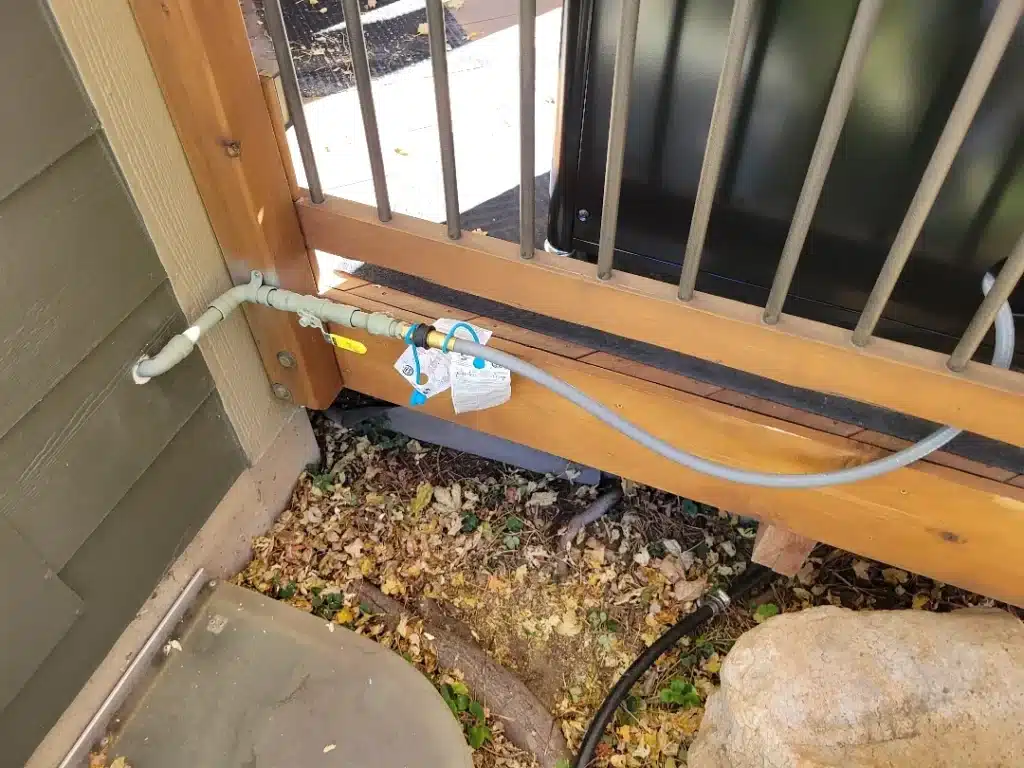
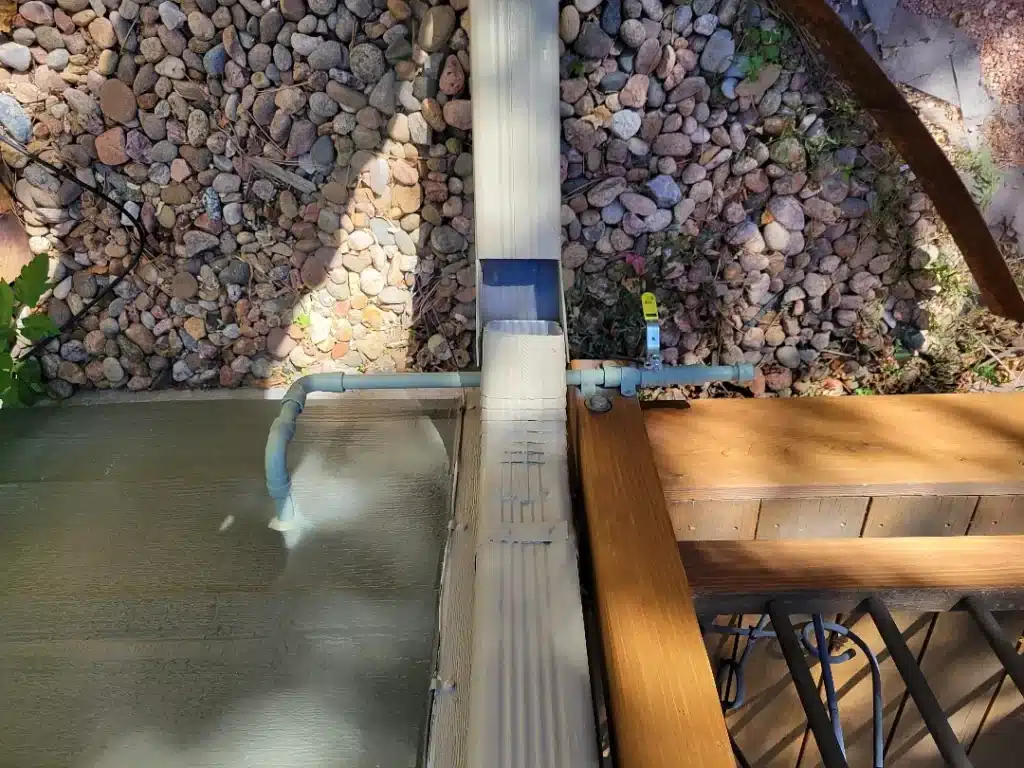
Gas Piping to Both BBQ Locations - Highlands Ranch
Problem:Gas piping to two locations on the back deck
Found:Layout for gas piping to two gas termination on the back deck.
Fixed:Cut in tee fitting on the main line from the gas meter *1 1/4"). Run 3/4" CSST to the area of the first termination. Install 3/4" X 1/2" X 1/2" CSST tee fitting. Run 1/2" CSST to the termination area where the next termination is located. Drill outside and run 1/2" black pipe and fittings behind the deck railing for the new gas lines. Install gas valves on both lines. Plug the unused line. Tie in the quick-connect fitting to the second termination behind the new BBQ grill.
Outcome:Turn on gas and test all joint for leaks. Paint all exposed steel pipe with Rustoleum paint.. Jobsite cleanup.
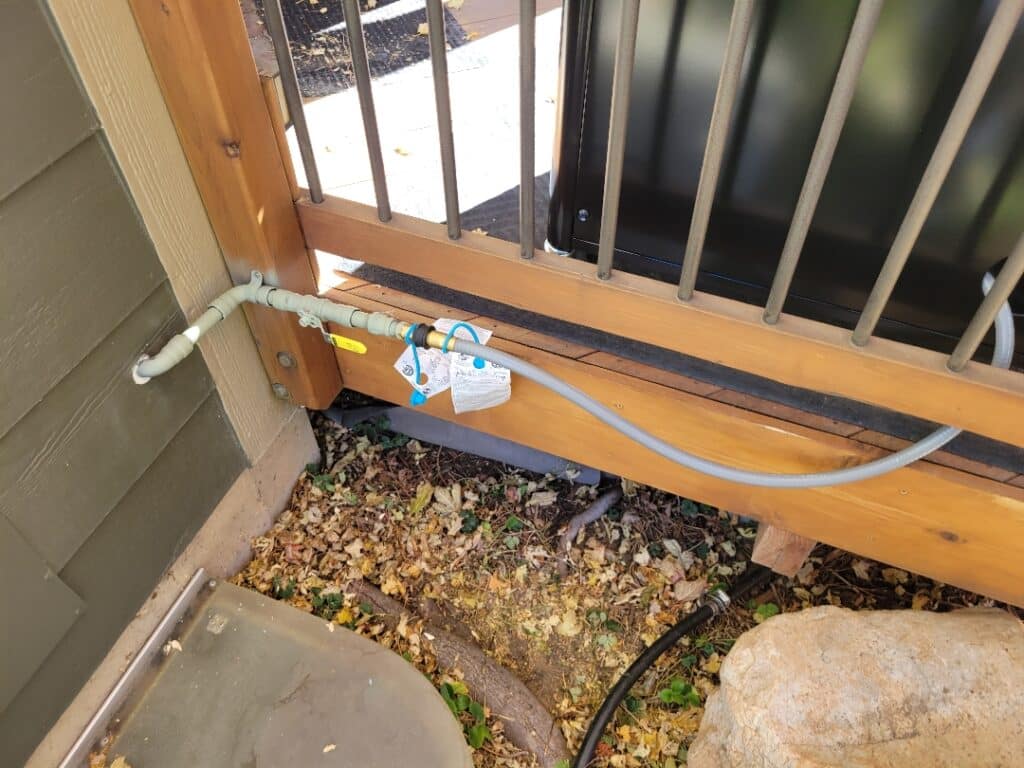
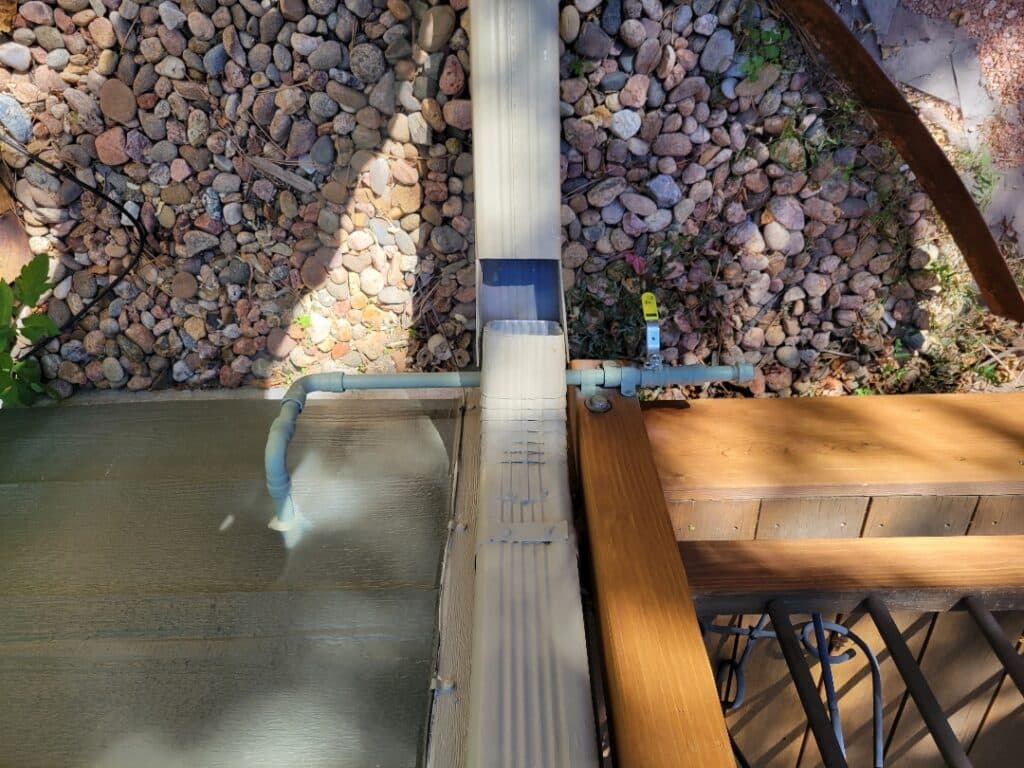
Gas Piping to Both BBQ Locations - Highlands Ranch
Problem:Gas piping to two locations on the back deck
Found:Layout for gas piping to two gas termination on the back deck.
Fixed:Cut in tee fitting on the main line from the gas meter *1 1/4"). Run 3/4" CSST to the area of the first termination. Install 3/4" X 1/2" X 1/2" CSST tee fitting. Run 1/2" CSST to the termination area where the next termination is located. Drill outside and run 1/2" black pipe and fittings behind the deck railing for the new gas lines. Install gas valves on both lines. Plug the unused line. Tie in the quick-connect fitting to the second termination behind the new BBQ grill.
Outcome:Turn on gas and test all joint for leaks. Paint all exposed steel pipe with Rust oleum paint.
Natural Gas Infrastructure and Utility Data in Highlands Ranch
Xcel Energy serves as the primary natural gas provider for Highlands Ranch, delivering service through an extensive distribution network built alongside the community's development. The utility maintains approximately 2,400 miles of gas distribution mains throughout the Denver metropolitan area, with significant infrastructure serving Douglas County's residential corridors.
Service Area Statistics
Customer base – Xcel Energy serves over 1.5 million natural gas customers in Colorado
Distribution pressure – Residential service typically operates at 0.25 to 2 PSI after meter regulation
Emergency response – Utility maintains 24-hour gas leak response throughout the service territory
Infrastructure age – Most Highlands Ranch distribution mains installed between 1985 and 2005
Colorado's gas safety regulations require periodic leak surveys of distribution systems and prompt repair of identified hazards. The Colorado Public Utilities Commission oversees utility compliance, while individual property owners bear responsibility for gas piping beyond the meter – the demarcation point where Cardom Plumbing & Heating's services begin.
Local Permitting and Code Requirements
Douglas County Building Division administers permits for gas piping work in Highlands Ranch. Projects involving new gas lines, line extensions, or significant modifications require permits and inspection. The county follows the International Fuel Gas Code with Colorado amendments, including specific requirements for CSST bonding that have evolved significantly since many Highlands Ranch homes were built.
Permit requirements – New installations, relocations, and major repairs require permits
Inspection timing – Rough-in inspection before concealment, final inspection before service activation
CSST bonding – Current code requires direct bonding to electrical grounding system
Appliance clearances – Specific distance requirements from combustibles for all gas appliances
This regulatory framework protects homeowners but also means that gas work performed without proper permits may create complications during home sales, insurance claims, or future renovations. Cardom Plumbing & Heating handles permit applications and inspection coordination as part of our standard service process, ensuring your gas system improvements meet all current requirements.
Common signs include a faint sulfur smell, hissing sounds near gas lines, or dead vegetation patches in your yard. If your pilot light goes out frequently or appliances are not functioning properly, these could also indicate issues with your gas piping.
It's recommended to have your gas piping inspected at least once a year. Regular inspections can help identify potential leaks or issues before they become serious problems, ensuring the safety and efficiency of your gas system.
Services typically include installation, repair, inspection, and maintenance of gas lines. Professionals can also perform pressure testing and leak detection to ensure your system is safe and compliant with local codes.
Hiring a licensed professional ensures that the work meets local building codes and safety standards. This helps prevent dangerous leaks and ensures that your gas appliances operate efficiently and safely.
Common materials include corrugated stainless steel tubing (CSST) and black iron pipe. Each material has its own advantages and vulnerabilities, so it's important to choose the right one based on your specific needs and local conditions.
The elevation of 5,920 feet can impact combustion efficiency and the calibration of gas appliances. It's important to have your systems evaluated by professionals familiar with the unique challenges posed by the area's altitude.
If you suspect a gas leak, evacuate the area immediately and avoid using any electrical devices or open flames. Contact a professional gas service provider right away to assess the situation and make any necessary repairs.