
Recent Posts
Categories

Navigating Denver’s Water Heater Recycling Regulations in 2026
Your 12-year-old water heater just failed, and a rusty puddle is spreading across your Arvada basement floor. Now you own a 150-pound steel tank full of sediment, and the trash service refuses to touch it. This post covers water heater recycling under Denver's updated 2026 rules, including where to take your old unit, what it [...]

The Benefits of Regular Boiler Tune-Ups in Broomfield
A dead boiler on a 5-degree January morning in Broomfield is a nightmare no homeowner wants. When the temperature drops along the Front Range, an old or neglected boiler picks the worst moment to quit. A yearly boiler tune-up stops most of those emergencies before they start. This post explains what a tune-up covers, how [...]

Understanding Arvada’s Plumbing Codes for New Bathroom Installations
You picked out the tile, ordered the vanity, and scheduled the demo for your new bathroom. Then the permit inspector flags your vent line and the project stalls for two weeks. That scenario plays out across Arvada more than most homeowners expect, and the fix starts with knowing Arvada plumbing codes before the first pipe [...]

How to Choose Energy-Efficient Dishwashers for Denver Homes
Denver's hard water leaves cloudy film on glasses and scale inside older dishwashers. A worn-out unit wastes water, runs longer cycles, and drives up your utility bills. Choosing the right energy-efficient dishwashers for your Arvada or Denver home fixes both problems at once. This post breaks down what to look for in ratings, water use, [...]

Avoiding Water Hammer Issues in Arvada Homes
That sudden bang in the wall when you shut off the kitchen faucet? Many older Arvada homes make that sound, and it has a name: water hammer. It points to a real pressure problem inside your pipes. Homes built along Arvada's older streets near Olde Town and Ralston Valley are prone to this issue. Their [...]
Preparing Your Boiler for Colorado’s High-Altitude Conditions
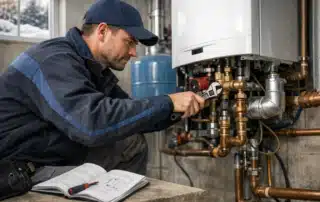
At 5,300 feet in Arvada, a boiler that ran fine at sea level can short-cycle, waste gas, and struggle to heat your home. Thin mountain air changes how fuel burns, and most factory-set boilers arrive calibrated for lower elevations. That gap is why boiler preparation high altitude matters more here than almost anywhere else in [...]

Choosing the Perfect Bathtub for Arvada’s Hard Water
Water in Arvada runs hard, measuring between 8 and 15 grains per gallon across many neighborhoods. That mineral load leaves chalky rings, dulls finishes, and shortens the life of a new tub fast. If you're picking a bathtub hard water can't destroy, material choice matters more than looks. This post covers which tub materials hold [...]

Understanding the Cost of Water Heater Installation in Wheat Ridge
A cold shower on a January morning in Wheat Ridge usually means one thing: your water heater has failed. When that happens, the first question homeowners ask is about the water heater installation cost and what drives the final number. This post breaks down real pricing for Wheat Ridge homes. You will learn what affects [...]
How to Choose the Right Gas Appliance for High-Altitude Homes in Westminster
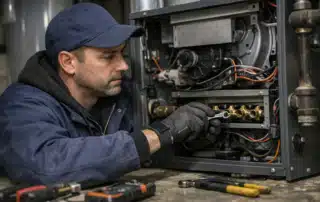
At 5,300 feet, a furnace pulled straight off a shelf can short-cycle, soot up, or trip its safety limit within a week. Choosing a gas appliance for high altitude is the difference between steady heat and a mid-January no-heat call in Westminster. This post covers what changes above 2,000 feet, which appliances need derating, and [...]

Summer Plumbing Maintenance Checklist for Broomfield Homes
Broomfield homes hit hard summer stress once sprinkler systems kick on and air conditioning runs nonstop. That combination strains outdoor spigots, water heaters, and supply lines all at once. This checklist covers the summer plumbing maintenance steps that matter most for Front Range homeowners. You will learn how to test irrigation lines, flush your water [...]


